Mayfly Nymph: The Remarkable Underwater Life of a Mayfly Before It Takes Flight

The mayfly nymph is one of the most fascinating organisms found in freshwater ecosystems. Although mayflies are best known for their remarkably short adult lives, often lasting only hours or a few days, the majority of their existence takes place underwater. Before a mayfly develops wings and rises above the surface, it spends weeks, months, and in some species even years as an aquatic nymph.
Scientifically, mayflies belong to the insect order Ephemeroptera. Their immature stage is commonly called a nymph or naiad. During this period, the insect feeds, grows, molts repeatedly, avoids predators, and gradually develops the physical traits needed to transform into a winged insect.
Unlike a celebrity biography, a mayfly nymph has no conventional identity, family history, education, career, spouse, children, or financial status. Its story is instead defined by its biology, habitat, development, survival strategies, and ecological importance.
Mayfly nymphs are also valuable to scientists and environmental specialists. Many species are sensitive to changes in water quality, making them useful indicators of freshwater ecosystem conditions.
What Is a Mayfly Nymph?
A mayfly nymph is the aquatic juvenile stage of a mayfly.
Mayflies undergo incomplete metamorphosis. Their basic life cycle can be described as:
Egg → Nymph → Subimago → Adult
The nymph is the longest stage of this life cycle. Unlike the winged adult, it lives underwater and is specially adapted to aquatic conditions.
Thousands of mayfly species exist, and their nymphs can look very different from one another. Some have flattened bodies designed for living on rocks in fast-moving streams, while others are adapted for swimming or burrowing into sediment.
Scientific Classification
Scientific Name
No single species is called a “mayfly nymph.” The phrase describes the immature stage of species belonging to the order Ephemeroptera.
Mayflies are divided into numerous families, genera, and species. As a result, a mayfly nymph’s appearance, size, habitat, feeding behavior, and development time depend on its species.
Physical Appearance
Mayfly nymphs commonly have elongated or flattened bodies, six legs, antennae, abdominal gills, and two or three tail filaments.
Their environment strongly influences their body shape.
Nymphs in fast-flowing streams may have flattened bodies that let them stay close to rocks and avoid being swept away. Other species have more streamlined bodies that help them swim through still or slow-moving water.
The abdominal gills are among their most recognizable features. These structures allow the nymph to obtain oxygen from the water.
Early Life: From Egg to Nymph
The mayfly’s life begins when an adult female lays eggs in or near freshwater.
Depending on the species, eggs may be deposited directly into the water or placed on underwater surfaces. Once the eggs hatch, tiny mayfly nymphs emerge and begin their aquatic lives.
This moment marks the beginning of the longest part of the insect’s development.
Young nymphs are extremely small, but they already have the basic structures needed to survive underwater. They begin feeding and growing almost immediately.
The Mayfly Nymph’s Early Development
If a mayfly’s life were compared to a human biography, the nymphal stage would represent childhood, adolescence, education, and professional development all at once.
The nymph does not simply remain underwater waiting for adulthood. It is continuously changing.
It feeds, grows, molts, develops larger wing pads, strengthens its body, and gradually prepares for its eventual emergence from the water.
The length of the nymphal stage varies greatly between species. Some mayflies complete their development within several weeks, while others may spend many months or even years underwater.
Temperature, food availability, water conditions, and seasonal patterns can all influence the speed of development.
Where Does a Mayfly Nymph Live?
Mayfly nymphs are freshwater organisms.
They can be found in a variety of habitats, including:
- Rivers
- Streams
- Brooks
- Lakes
- Ponds
- Springs
- Shallow shoreline environments
- Gravel beds
- Mud and sand sediments
- Areas covered with aquatic vegetation
Not every species prefers the same environment.
Some require cool, clean, oxygen-rich flowing water, while others can live in slower-moving habitats.
Fast-Moving Streams
Certain mayfly nymphs are specially adapted to strong currents.
Their flattened bodies and strong legs allow them to hold onto submerged stones. Their low profile also reduces the force of the current acting against their bodies.
Lakes and Slow Water
Other species are better suited to quiet water.
These nymphs may live among aquatic plants, beneath submerged debris, or within soft sediments.
Burrowing Species
Some mayfly nymphs have powerful legs and body structures that allow them to dig into mud or sand.
Living beneath the sediment can protect them from currents and some predators while providing access to food.
What Do Mayfly Nymphs Eat?
A mayfly nymph’s diet depends on its species.
Many species feed on algae, plant material, bacteria, fungi, organic debris, and other materials that accumulate on underwater surfaces.
A nymph may crawl over a rock and scrape algae from its surface. Others collect small particles from the water or feed on decomposing plant material.
Some species have more specialized diets, and a small number can be predatory.
The feeding stage is extremely important because the energy acquired during the nymphal period supports the insect through its later transformation into an adult.
Growth and Molting
One of the most remarkable features of the mayfly nymph is its ability to molt repeatedly.
Because an insect’s exoskeleton cannot expand continuously, the nymph must periodically shed its old outer covering.
This process is called molting.
After a molt, the nymph has a larger body and continues growing until it reaches the next developmental stage.
Mayfly nymphs can molt many times. Depending on the species, they may pass through numerous developmental stages before reaching maturity.
Each stage brings the insect closer to its final transformation.
Survival Underwater
The underwater environment is full of dangers.
Mayfly nymphs are an important food source for fish and other aquatic predators. They must therefore find ways to survive long enough to complete their development.
Different species use different strategies.
Some remain hidden beneath stones. Others cling tightly to rocks. Some swim rapidly when disturbed, while burrowing species can disappear into sediment.
Body shape is closely connected to survival.
A flattened nymph can remain close to the surface of a rock in a strong current. A streamlined nymph may swim better. A burrowing species may possess specialized legs that help it move through sediment.
Mayfly Nymphs and Water Quality
Mayfly nymphs are particularly important to environmental scientists because many species are sensitive to pollution and environmental disturbance.
Healthy populations of certain mayflies can indicate favorable freshwater conditions.
When water quality declines because of pollution, sedimentation, habitat destruction, or reduced oxygen levels, sensitive species may disappear or become less abundant.
For this reason, mayflies are commonly considered part of the group of aquatic insects used to assess freshwater ecosystem health.
However, not every mayfly species has the same environmental requirements. Some are more tolerant than others.
The Relationship Between Mayflies and Fish
Mayfly nymphs occupy an important position in aquatic food webs.
They are a valuable food source for fish, particularly in streams and rivers where aquatic insects make up a major part of many freshwater species’ diet.
When mayfly nymphs become abundant, fish may feed heavily on them.
This relationship has made mayflies extremely important to recreational fishing.
Mayfly Nymphs in Fly Fishing
Fly fishermen have studied mayflies for generations.
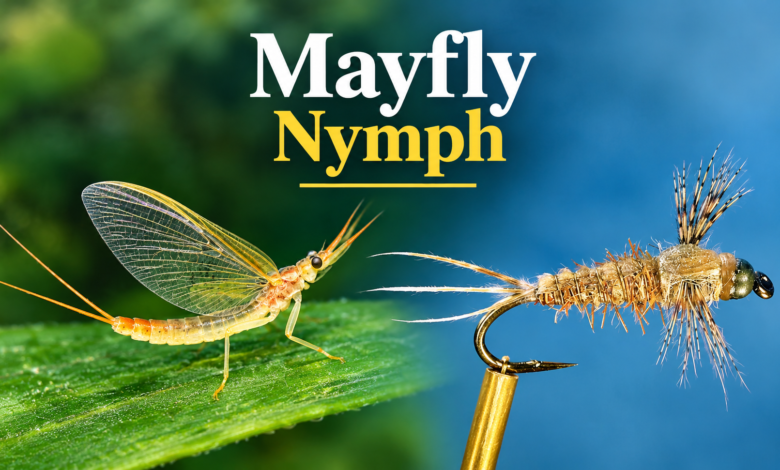
Artificial flies are often designed to imitate different stages of a mayfly’s life cycle. Nymph imitations are especially important because the aquatic stage occupies such a large portion of the insect’s life.
Anglers may choose artificial patterns based on the size, shape, color, and developmental stage of mayflies present in a particular body of water.
The connection between mayflies and fly fishing demonstrates how an extremely small freshwater insect can have a significant cultural and recreational influence.
The Journey Toward Adulthood
Eventually, a mature mayfly nymph reaches the end of its underwater development.
This is the point when its life changes dramatically.
The nymph prepares to leave the water and become a winged insect.
Depending on the species, it may swim toward the surface, crawl onto a rock, climb aquatic vegetation, or emerge in another way.
Its outer skin eventually splits.
A winged insect emerges from the old nymphal skin.
But the transformation is not quite finished.
The Subimago Stage
Mayflies have a remarkable feature that makes their life cycle unusual among insects.
The first winged stage is called the subimago.
The subimago looks like an adult mayfly, but it is not yet fully mature.
It usually moves away from the water and rests on vegetation or another nearby surface.
After a period of development, the subimago molts one more time.
The resulting insect is the fully mature adult mayfly.
This additional winged molt is a defining characteristic of mayflies.
The Adult Mayfly
The adult mayfly has a completely different lifestyle from the nymph.
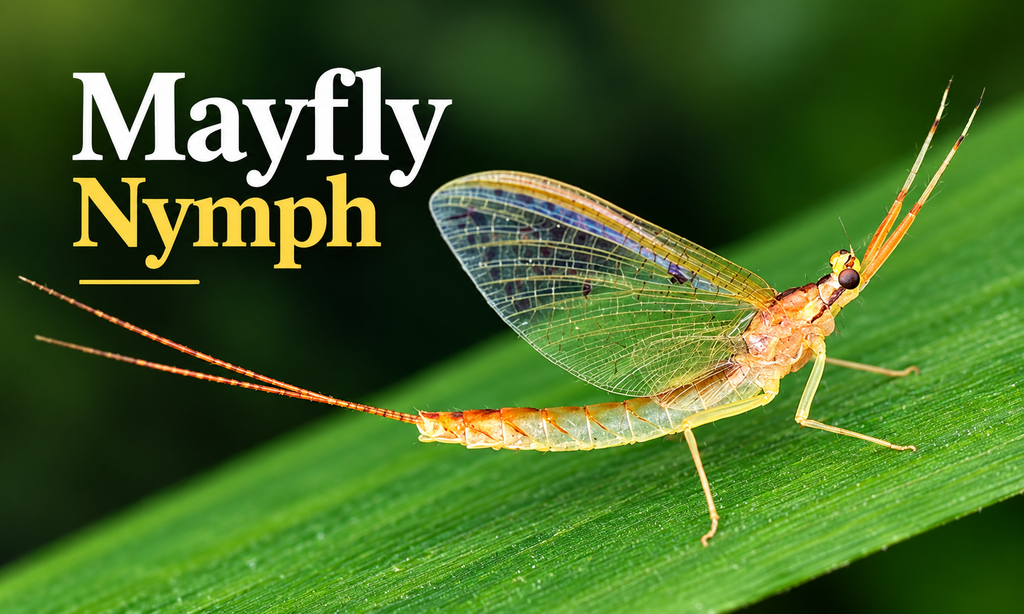
It has wings, large eyes, long tails, and reproductive organs suited to its final purpose.
Most adult mayflies do not feed.
Their digestive systems are greatly reduced, and they generally rely on energy accumulated during their nymphal development.
The adult stage is therefore focused primarily on reproduction.
Why Do Mayflies Live Such Short Adult Lives?
The mayfly’s famous short lifespan refers mainly to its adult stage.
Some adult mayflies survive only a few hours, while others can live for several days or longer, depending on the species.
The short adult period does not mean the insect has a short overall life.
In fact, the opposite can be true.
The mayfly may spend a large portion of its existence underwater before becoming an adult.
The final winged stage is simply the brief reproductive conclusion of a much longer life cycle.
Reproduction
Adult mayflies often gather in large mating groups.
Males of many species form aerial swarms, creating one of the most recognizable sights associated with mayfly emergence.
Females enter the swarm and mating takes place.
After mating, females return to the water and deposit their eggs.
The next generation then begins its underwater existence.
This cycle can repeat seasonally or according to the specific reproductive schedule of the species.
Parents and Siblings
The concepts of parents and siblings don’t apply to mayfly nymphs the same way they do to humans.
A mayfly nymph develops from an egg an adult female produces after reproducing with a male.
Once the egg is laid, parents generally provide no care.
The young nymph must survive independently.
A group of nymphs may hatch in the same area, but they do not form family groups or maintain sibling relationships.
Does a Mayfly Nymph Have a Spouse or Partner?
No.
Mayfly nymphs do not form partnerships.
Mating occurs during the short adult stage.
The adults generally live long enough to reproduce and complete the life cycle.
No evidence shows long-term pair bonding or family structures comparable to those found in mammals or birds.
Does a Mayfly Nymph Have Children?
A nymph itself does not reproduce.
Reproduction takes place after the insect reaches adulthood.
Adult females lay eggs, and those eggs eventually produce the next generation of nymphs.
The nymphal stage is therefore part of a repeating biological cycle rather than an independent family life.
Famous Family Members
There are no famous family members in the conventional sense.
However, mayflies have many relatives within the order Ephemeroptera.
Different families and species display remarkable differences in body shape, behavior, habitat preference, and development.
Some mayflies are associated with mountain streams, others with lowland rivers, and still others with lakes and ponds.
Their evolutionary diversity is one reason entomologists study mayflies.
Can Mayfly Nymphs Harm Humans?
Mayfly nymphs are harmless to humans.
They do not normally bite, sting, or attack people.
Their mouthparts are adapted for feeding on aquatic materials rather than for defending themselves against people.
Adult mayflies are also generally harmless.
Large mayfly emergences can sometimes be inconvenient because huge numbers of insects may gather around lights, roads, buildings, or bridges. Still, they are not considered a major threat to human health.
Ecological Importance
Although tiny, mayfly nymphs perform several important ecological functions.
They are part of freshwater food webs and feed fish, amphibians, birds, and other organisms.
They also help process organic material.
By feeding on algae, plant matter, and decomposing material, they help move energy through aquatic ecosystems.
Their presence can also provide useful information about environmental conditions.
Environmental Threats
Mayfly nymphs can be affected by changes in freshwater environments.
Potential threats include:
- Water pollution
- Habitat destruction
- Excessive sedimentation
- Changes in water temperature
- Reduced dissolved oxygen
- Altered river flow
- Loss of aquatic vegetation
- Chemical contamination
- Climate-related environmental changes
Species with highly specialized habitat requirements may be particularly vulnerable.
Protecting freshwater ecosystems therefore helps preserve mayflies as well as the many other organisms that depend on healthy rivers, streams, lakes, and wetlands.
Public Appearances and Cultural Recognition
The mayfly nymph is not a public figure, but mayflies themselves have become well known because of their dramatic emergence events.
In some locations, enormous numbers of mayflies emerge at the same time.
The resulting swarms can become visible from a considerable distance and may temporarily cover nearby surfaces.
Such events have attracted attention from scientists, photographers, fishermen, nature enthusiasts, and local communities.
For many people, these events provide a memorable example of the extraordinary reproductive strategy of aquatic insects.
Social Media Presence
A mayfly nymph does not have a social-media account or personal online identity.
However, mayflies often appear in educational photography, wildlife videos, fishing content, scientific communication, and environmental campaigns.
Close-up photography has also made it easier to appreciate details that would otherwise be hard to see, including the nymph’s gills, legs, tail filaments, and developing wing pads.
Net Worth and Economic Value
A mayfly nymph obviously has no personal net worth.
No meaningful financial value can be assigned to an individual insect in the same way a person’s wealth can be measured.
However, mayflies have indirect economic and recreational importance.
They support freshwater food webs, contribute to healthy aquatic environments, and play a significant role in fly fishing.
Their ecological value is therefore much more meaningful than a financial valuation.
Life Today
At any given time, enormous numbers of mayfly nymphs are living beneath freshwater surfaces around the world.
Some are attached to stones in cold mountain streams.
Others are feeding among aquatic plants in quiet water.
Some burrow through sediment, while others prepare for their final emergence.
Each individual is following the same basic biological pattern: feeding, growing, molting, and eventually transforming.
For a mature nymph, the most dramatic moment of its life is approaching.
Soon it will leave the underwater environment that has protected and sustained it for most of its existence.
The Remarkable Final Transformation
The mayfly’s transformation from aquatic nymph to winged adult is one of nature’s most striking examples of biological change.
The nymph begins life without wings and depends entirely on freshwater.
Over time, wing pads develop.
Its body changes.
Its behavior changes.
Eventually, it emerges from the water as a winged subimago.
After another molt, it becomes a sexually mature adult.
The entire process is remarkable because the adult looks and behaves so differently from the nymph.
Why the Mayfly Nymph Matters
The mayfly nymph may be small and easily overlooked, but its importance is much greater than its size suggests.
It is a food source for fish and other wildlife.
It contributes to freshwater food webs.
It helps process organic material.
It can provide information about water quality.
It also represents an important link between aquatic and terrestrial ecosystems.
Perhaps most remarkably, the nymph spends most of its life preparing for an adult existence that may last only a few hours or days.
That contrast is what makes the mayfly so fascinating.
Conclusion
The story of the mayfly nymph is not a story of fame, wealth, family, or celebrity. It is a story of transformation and survival.
Born from an egg in freshwater, the nymph spends the majority of its existence underwater. It feeds, grows, molts repeatedly, avoids predators, and adapts to its environment.
Eventually, it leaves the water and enters the extraordinary final stages of its life.
The winged adult may survive only a short time, but that brief adult life culminates a much longer aquatic journey.
For scientists, anglers, environmentalists, and nature enthusiasts, the mayfly reminds us that some of nature’s most important stories are hidden beneath the surface.
The mayfly nymph may never attract the attention given to larger animals. Still, its role in freshwater ecosystems makes it one of the most significant small organisms in the natural world.
Frequently Asked Questions
What is a mayfly nymph?
A mayfly nymph is the aquatic immature stage of a mayfly. It lives underwater before eventually developing into a winged insect.
How long does a mayfly nymph live?
The nymphal stage varies by species. Some mayfly nymphs live for several weeks, while others remain underwater for many months or even years.
What do mayfly nymphs eat?
Many mayfly nymphs eat algae, plant material, organic debris, fungi, bacteria, and other materials found in freshwater environments. Some species have specialized feeding habits.
Where do mayfly nymphs live?
They live in freshwater environments such as rivers, streams, lakes, ponds, springs, and shallow aquatic habitats. Individual species often have specific habitat preferences.
Do mayfly nymphs bite humans?
No. Mayfly nymphs are harmless to humans and are not known to bite or attack people.
Why are mayfly nymphs important?
Mayfly nymphs are an important food source for fish and other aquatic animals. They also support freshwater food webs and help scientists assess environmental conditions.
How does a mayfly nymph become an adult?
The nymph grows through repeated molts before eventually emerging from the water as a winged subimago. The subimago then molts once more to become the sexually mature adult mayfly.