Lower Bleph Before and After: What Changes, Recovery, Results, and What Photos Really Show


“Lower bleph before and after” has become a popular search phrase for people trying to understand what lower eyelid surgery can realistically change. Unlike a celebrity biography, this topic does not relate to one identifiable person with a birth date, family history, career, or net worth. Instead, it concerns a cosmetic and reconstructive procedure known as lower blepharoplasty.
Before-and-after photographs can make the procedure appear straightforward, but the changes involve delicate structures around the eyes. Lower blepharoplasty may address under-eye bags, excess skin, fat prominence, tear-trough irregularities and some forms of lower-eyelid laxity. The exact result depends heavily on a person’s anatomy, the surgical technique used, and the amount of tissue that needs repositioning or removal.
Modern approaches have also moved beyond simply removing fat. Surgeons may reposition existing fat, preserve supporting structures, tighten the lower eyelid when appropriate, or combine several techniques to create a smoother transition between the lower eyelid and cheek.
What Is Lower Blepharoplasty?
Lower blepharoplasty, commonly called lower eyelid surgery, is a procedure designed to improve the appearance and, in selected cases, function of the lower eyelids.
The lower eyelid changes naturally over time. Skin can become looser, supporting tissues may weaken, and orbital fat can become more prominent. These changes can contribute to the appearance commonly described as under-eye bags.
Research on lower-eyelid anatomy has identified several structural factors involved in these changes, including orbital fat, supporting ligaments, muscles and the relationship between the eyelid and cheek.
The procedure is technically more complex than simply removing visible excess skin. The surgeon must consider eyelid support, facial proportions, skin quality, and the relationship between the eye socket and surrounding tissues.
Lower Bleph Before and After: What Usually Changes?
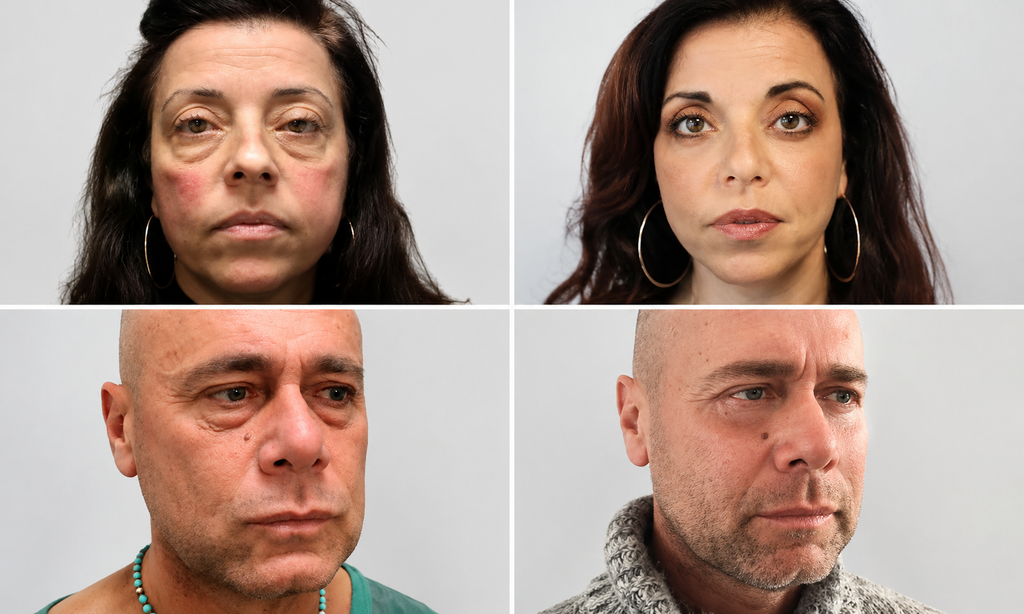
The most noticeable difference in a lower bleph before and after comparison is often the appearance of the area directly beneath the eyes.
Before surgery, a person may have visible lower-eyelid bags, puffiness, excess skin or a pronounced transition between the lower eyelid and upper cheek.
After healing, the same area may appear smoother and less prominent. However, results vary considerably.
Under-Eye Bags
Lower Bleph Before and After, One of the most common reasons people investigate lower blepharoplasty is persistent under-eye puffiness.
These bags are not always caused by simple swelling. In some people, orbital fat becomes more prominent, making the under-eye area look fuller.
Surgery may involve removing a carefully selected amount of fat or repositioning it to improve the contour.
Excess Lower-Eyelid Skin
Some patients have loose or redundant skin beneath the eyes.
A transcutaneous approach lets the surgeon address excess skin directly. However, removing too much skin can affect the position and function of the lower eyelid, so conservative treatment and careful planning are important.
Tear Trough Appearance
The tear trough is the depression that can appear between the lower eyelid and upper cheek.
It may become more noticeable with age, changes in facial volume or individual anatomy. Modern lower blepharoplasty may sometimes use existing orbital fat to soften this transition rather than simply removing fat.
This is one reason two people undergoing apparently similar procedures can have very different before-and-after photographs.
Lower Blepharoplasty Techniques
No single technique fits every patient.
Transconjunctival Lower Blepharoplasty
In a transconjunctival procedure, access is made through the inside of the lower eyelid.
This approach can be useful when the primary concern is orbital fat prominence, and there is relatively little excess external skin.
Because the incision is inside the eyelid, there is no traditional external lower-eyelid incision.
Transcutaneous Lower Blepharoplasty
A transcutaneous approach uses an incision through the skin beneath the eyelashes.
It provides access to excess skin and underlying tissues. Depending on the patient’s anatomy, the procedure may also involve fat repositioning and additional support of the lower eyelid.
The technique requires particular attention to eyelid support because changes to the lower eyelid can produce functional or aesthetic complications.
Fat Repositioning
Fat repositioning has become an important part of contemporary lower eyelid surgery.
Rather than removing all prominent fat, a surgeon may reposition some to improve the contour between the lower eyelid and cheek.
This can be particularly relevant when a hollow or tear-trough depression accompanies under-eye bags.
Why Before-and-After Photos Can Be Misleading
Before-and-after photographs can be useful, but they should not be interpreted as guarantees.
Lighting, facial expression, camera distance, head position and image processing can all influence how the eye area looks.
A photograph taken before surgery under harsh overhead lighting may emphasize shadows beneath the eyes. A postoperative photograph taken with softer lighting can make the same area appear considerably smoother.
For meaningful comparison, photographs should ideally have similar lighting, camera positioning, facial expression and distance from the camera.
Healing Also Changes the Appearance
A photograph taken shortly after surgery does not necessarily represent the final result.
Swelling and bruising are common during early recovery. Temporary dryness, irritation and tightness may also occur.
The American Society of Plastic Surgeons notes that many patients become publicly presentable within roughly 10 to 14 days, although complete healing can take considerably longer.
For that reason, interpret a “before and after” image taken only days or a few weeks apart differently from a photograph taken several months after surgery.
What Happens During Lower Blepharoplasty?
The exact operation depends on the individual’s anatomy and treatment plan.
Before surgery, the surgeon generally evaluates the lower eyelid, surrounding tissues, facial proportions and the amount of skin or fat involved.
During surgery, the surgeon may remove, reposition, or support the selected tissues.
In some patients, additional procedures improve lower-eyelid stability. These can include lateral canthal support or other techniques intended to maintain the eyelid’s natural position.
The goal is generally not to create an entirely different eye shape. Instead, successful aesthetic treatment aims to create a smoother, more balanced transition between the eyelid and cheek.
Lower Bleph Before and After Recovery Timeline
Recovery is an important part of understanding before-and-after results.
First Few Days
Swelling and bruising are common immediately after surgery.
The eyes may feel irritated, tight or dry. Cold compresses, lubricating treatments and prescribed medications may be recommended depending on the individual case.
Patients generally receive detailed postoperative instructions on activity, wound care, and follow-up appointments.
One to Two Weeks
Much of the obvious bruising may begin to settle during this period.
Many patients can return to normal public activities within approximately two weeks, although individual recovery varies.
The eyelids may still appear somewhat swollen or uneven while healing continues.
Several Weeks
The appearance generally becomes more natural as swelling decreases.
Small differences between the two sides can remain during healing, and patients should not assume that an early postoperative appearance represents the final result.
Several Months
The tissues continue to settle over time.
You can generally assess the cosmetic outcome more reliably after substantial healing, rather than immediately after surgery.
What Can Lower Bleph Before and After Results Show?
A successful result may include several visible changes.
The lower eyelid can appear smoother, under-eye bags may be less prominent, and the transition from eyelid to cheek can become less sharply defined.
In some cases, the overall face may appear more rested even though the surgery is limited to the eyelid area.
However, lower blepharoplasty does not eliminate every cause of dark circles or under-eye ageing.
Dark pigmentation, visible blood vessels, thin skin, allergies, genetics and facial shadows can remain after surgery.
This distinction is important because someone searching for “lower bleph before and after” may expect every under-eye concern to disappear.
Risks and Possible Complications
Lower eyelid surgery is generally considered a procedure with a relatively low overall complication rate when performed appropriately, but it remains delicate surgery.
Possible problems include swelling, bruising, dry eyes, irritation, asymmetry, contour irregularities and changes in eyelid position.
More significant lower-eyelid complications can include malposition, ectropion or excessive scleral show.
Recent systematic reviews describe lower blepharoplasty as generally safe, while emphasizing that the procedure remains technically demanding and complications can occur.
The evidence also shows why surgical planning matters. Lower-eyelid anatomy is complex, and removing too much tissue can create problems that may require additional treatment.
Lower Bleph Before and After: Why Results Differ From Person to Person
Two people can undergo lower blepharoplasty and receive noticeably different results.
Age and Skin Quality
Skin elasticity differs substantially between individuals.
A younger person with relatively firm skin may need a different approach from someone with significant skin laxity.
Facial Anatomy
The shape of the orbit, cheek structure, fat distribution and eyelid support all influence the final appearance.
Amount of Fat
Some people have prominent orbital fat, while others have relatively little fat but noticeable hollowing.
The treatment strategy therefore cannot be determined from a photograph alone.
Surgical Technique
Transconjunctival and transcutaneous procedures address different anatomical situations.
Fat removal, fat repositioning, skin excision and eyelid-support procedures may also be combined differently depending on the patient’s needs.
Does Lower Blepharoplasty Permanently Remove Under-Eye Bags?
Lower blepharoplasty can produce long-lasting improvement, but it does not stop the ageing process.
The tissues continue to change naturally over time.
The American Society of Plastic Surgeons describes eyelid-surgery results as long-lasting while noting that patients continue to age naturally.
This means that a person may maintain significant improvement while still developing new age-related changes years later.
Long-term evidence is also more limited than many casual before-and-after galleries suggest. Research has noted that studies often do not provide long enough photographic follow-up to show how results evolve over many years.
Lower Blepharoplasty and Facial Rejuvenation
Lower blepharoplasty is sometimes performed as part of a broader facial rejuvenation plan.
Depending on the person’s anatomy, surgeons may consider the relationship between the lower eyelid, cheek and midface rather than treating the eyelid as an isolated structure.
This broader approach helps explain why modern lower blepharoplasty doesn’t necessarily focus on simply removing tissue.
The objective is to restore a smoother contour while preserving a natural appearance.
Who May Consider Lower Blepharoplasty?
People considering the procedure often have persistent concerns such as:
- Prominent lower-eyelid bags
- Excess skin beneath the eyes
- Lower-eyelid puffiness
- Tear-trough contour irregularities
- Changes associated with ageing
- Certain lower-eyelid structural concerns
Not every under-eye problem requires surgery.
Some concerns may be influenced by allergies, sleep, pigmentation, skin texture, dehydration or other factors that surgery cannot necessarily correct.
A qualified surgeon can determine whether lower blepharoplasty is appropriate after an individual examination.
Choosing a Surgeon for Lower Eyelid Surgery
Because the lower eyelid is anatomically delicate, qualifications and experience matter.
Patients commonly review a surgeon’s training, experience with eyelid surgery, before-and-after photographs and approach to complications.
It is also important to discuss expectations openly.
A responsible consultation should address what the procedure can realistically improve, what it cannot change, the expected recovery period and possible complications.
Patients should also be cautious about interpreting social-media photographs as medical evidence. Online images may not show the full healing process or the original conditions under which photographs were taken.
What a Realistic Lower Bleph Before and After Looks Like
The most realistic expectation is usually refinement, not transformation.
A good result may be subtle enough that others notice you look more refreshed without immediately realizing you had eyelid surgery.
The lower eyelid should generally retain a natural shape and relationship with the eye.
Overcorrection can create an unnatural appearance, which is one reason modern approaches increasingly emphasize preserving and repositioning tissues where appropriate.
Frequently Asked Questions
What is lower bleph before and after?
“Lower bleph before and after” refers to photographs comparing the appearance of the lower eyelids before and after lower blepharoplasty. These images commonly show changes in under-eye bags, excess skin, fat prominence, and eyelid-cheek contour.
How long does lower blepharoplasty take to heal?
Initial bruising and swelling often improve substantially within the first couple of weeks, but deeper healing and tissue settling can continue for several months. Recovery varies by surgical technique and individual patient.
Does lower blepharoplasty remove dark circles?
Not necessarily. Surgery can improve bags and certain contour problems, but pigmentation, thin skin and vascular visibility may remain. Dark circles have multiple possible causes.
Does lower blepharoplasty remove under-eye bags permanently?
It can provide long-lasting improvement, particularly when the bags are related to orbital fat prominence. However, natural ageing continues, so the lower eyelid’s appearance can change over time.
Is lower blepharoplasty painful?
Patients can experience discomfort, tightness, irritation and swelling after surgery. Discomfort varies, and postoperative care helps manage these symptoms.
When can someone see the final lower blepharoplasty result?
Swelling and bruising can affect early appearance. Tissues continue to settle after the initial recovery period, so final assessment is generally more meaningful after substantial healing than immediately after surgery.
Are lower blepharoplasty results the same for everyone?
No. Results depend on factors including skin quality, fat distribution, facial anatomy, eyelid support, surgical technique and the individual’s healing process. Before-and-after photographs should therefore be viewed as examples, not promises of a specific result.
Conclusion
The popularity of lower bleph before and after searches reflects growing interest in what lower eyelid surgery can realistically accomplish. The procedure can address several structural causes of under-eye ageing, including prominent orbital fat, excess skin and changes in the transition between the eyelid and cheek.
Modern lower blepharoplasty is more nuanced than simply removing under-eye fat. Depending on the individual, treatment may involve tissue preservation, fat repositioning, controlled skin removal or additional eyelid support.
Before-and-after photographs can provide useful visual information, but they should always be considered alongside the patient’s anatomy, recovery stage and surgical technique. The most meaningful comparison is one made under consistent photographic conditions and after sufficient healing.
For anyone considering the procedure, an individualized consultation with a qualified eyelid or facial plastic surgeon remains more informative than relying on photographs alone.