
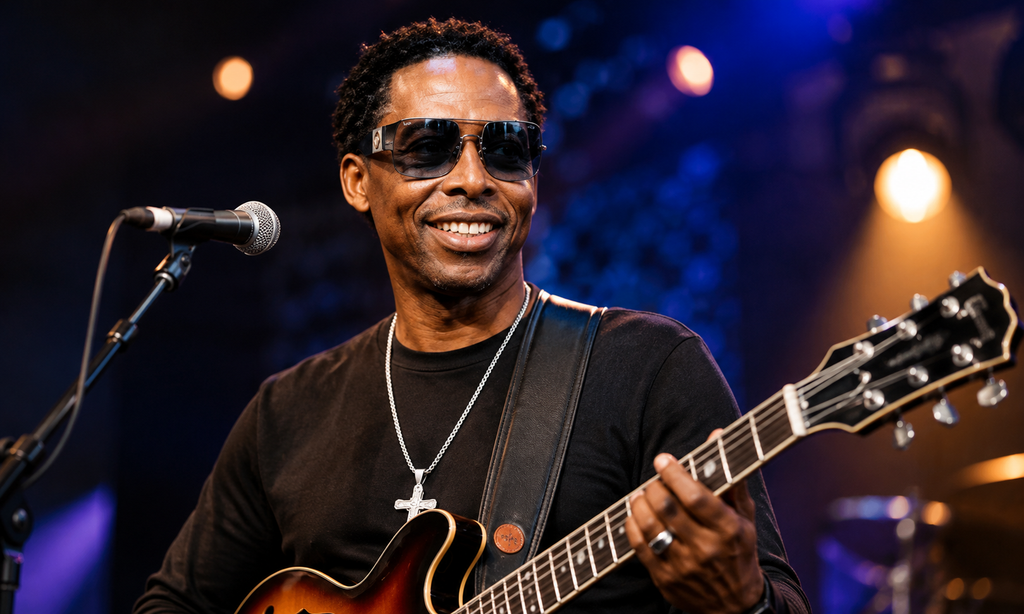
Joey Williams is an American gospel singer, guitarist, songwriter and longtime touring musician whose career has connected traditional gospel with blues, soul, roots music and contemporary performance. Best known for his work with the Grammy-winning Blind Boys of Alabama, Williams has also performed with Robert Randolph & the Family Band and developed music through his own Joey Williams Project.
Unlike many entertainers whose public identities were built around a single hit or album, Williams’ career has developed through decades of live performance, collaboration and musicianship. His story is also deeply connected to family: his father introduced him to music as a child, and gospel became part of his life long before he entered the professional recording industry.
Some personal details about Joey Williams are less extensively documented than his professional career. Major biographical sources do not consistently document his exact birth information, education, private relationships, or financial circumstances. Where information is available, it provides a picture of a musician whose professional life has remained closely tied to the guitar, gospel tradition and the road.
Joey Williams at a Glance
Full name: Joey Williams
Profession: Gospel singer, guitarist, songwriter and musician
Reported birth date: 17 November 1962
Reported birthplace: Brooklyn, New York
Raised: Queens, New York
Known for: The Blind Boys of Alabama, Robert Randolph & the Family Band, Joey Williams Project
Primary instruments: Guitar and vocals
Musical genres: Gospel, blues, roots, soul and related styles
Father: Joe Williams, a gospel singer and guitarist
Spouse: Monica Williams, according to album-credit acknowledgements
Children: Quan, Antoine and LJ, according to album-credit acknowledgements
Grammy recognition: Multiple Grammy wins and nominations through his work with the Blind Boys of Alabama
Current musical association: The Blind Boys of Alabama and independent projects
The 17 November 1962 birth date and Brooklyn birthplace are commonly reported in online biographical profiles, although these details are not as strongly documented in major institutional biographies as Williams’ musical career.
Early Life and Family Background
Joey Williams grew up in a musical household where gospel music was not simply entertainment but part of everyday life.
His father, Joe Williams, was a singer and guitarist who performed with a gospel quartet called the Northernaires. The family had connections to North Carolina through his father’s background, while Joey himself grew up in New York.
Williams has described beginning music at a remarkably young age. In interviews, he recalled playing drums as a small child. His early exposure came through church and through his father’s musical activities.
His Father Introduced Him to Music
Williams’ father played an especially important role in his development. When Joey was around seven or eight years old, his father brought home a guitar and began showing him basic chords.
That simple introduction eventually changed the direction of his life.
Williams has recalled that he initially played drums, but his father encouraged him to learn guitar because there were already many drummers while guitarists were less common. His father taught him an A chord, and Joey quickly became fascinated with the instrument.
By his early teens, he was already playing with experienced gospel musicians.
Childhood as a Young Gospel Musician
Williams’ childhood was unusual compared with that of most aspiring musicians. Instead of waiting until adulthood to enter the music industry, he was exposed to professional gospel performers early on.
He played with his father’s group and had opportunities to interact with established gospel performers who visited New York.
Among the artists in his early musical circle were Shirley Caesar, the Mighty Clouds of Joy, and the Gospel Keynotes.
Williams has recalled that Shirley Caesar heard him perform when he was around 12 or 13. Those experiences gave the young guitarist an early understanding of professional gospel performance.
His childhood therefore became the foundation for a career that would eventually take him around the United States and internationally.
Education and Musical Training
Publicly available biographies offer limited detail about Joey Williams’ formal education.
Some online professional profiles associate him with John Adams High School, but a comprehensive account of his educational history has not been widely published.
His most significant musical education appears to have come through direct experience rather than a conventional conservatory-style path. He learned from his father, church musicians and the professional gospel groups with whom he performed.
That environment gave him practical training in rhythm, accompaniment, stage performance and the traditions of gospel guitar.
For Williams, the stage effectively became a classroom.
Joey Williams’ Professional Career
Williams’ professional career developed gradually through gospel groups and touring opportunities.
As a young musician, he worked with his father’s Northernaires and later performed with other gospel acts. One of the most important chapters came when he joined the Mighty Clouds of Joy.
That connection ultimately led him toward the Blind Boys of Alabama.
Joining the Blind Boys of Alabama
Williams’ entry into the Blind Boys of Alabama is one of the most memorable stories in his career.
While touring with the Mighty Clouds of Joy during the early 1990s, Williams encountered the Blind Boys at a performance. A tour manager for the group was looking for a guitarist and asked Williams if he knew someone who might be interested.
Williams initially said that he would look for a guitarist.
Instead, he researched the Blind Boys, became impressed with the group and eventually offered himself for the position.
He joined the group in the mid-1990s and became an important guitarist and vocalist in its modern era.
A Long Association With the Blind Boys
The Blind Boys of Alabama had already established themselves as one of gospel music’s historic institutions long before Williams arrived.
The group’s roots stretch back to the late 1930s, and its members helped preserve and expand traditional gospel.
Williams entered that tradition while also bringing a younger musician’s experience with contemporary guitar, blues and soul.
His guitar work became part of the group’s evolving sound, allowing the Blind Boys to maintain their traditional identity while collaborating with musicians from outside the gospel world.
Grammy-Winning Career
Williams’ work with the Blind Boys of Alabama has brought him significant recognition from the Recording Academy.
The group’s Grammy success includes awards for projects such as Spirit of the Century, Higher Ground, Tell It on the Mountain, There Will Be a Light and Down in New Orleans.
More recently, the Blind Boys’ Echoes of the South won the Grammy for Best Roots Gospel Album at the 2024 Grammy Awards.
The Recording Academy’s records list Joey Williams with multiple Grammy wins and nominations through his work with the group.
His Grammy-recognised career demonstrates how his guitar and vocal work became part of a larger musical legacy rather than being limited to a single genre.
Work With Robert Randolph & the Family Band
Williams has also had an important connection with Robert Randolph & the Family Band.
His musical relationship with Randolph allowed him to explore a more contemporary combination of gospel, blues, rock, funk and soul.
Williams toured with the Family Band and performed alongside Randolph. His guitar playing also connected traditional gospel with modern roots-oriented music.
This period helped demonstrate his versatility beyond the Blind Boys of Alabama.
Williams has also performed with or appeared in musical settings involving artists such as Ben Harper and Peter Gabriel, adding to a career built around collaboration.
The Joey Williams Project
Williams has also developed music under the name Joey Williams Project.
The project has allowed him to move beyond the group format and present material connected more directly to his own musical identity.
A 2013 release titled The Joey Williams Project included songs such as “Make It Happen,” “Better Place,” “Daddy & My Guitar,” “24 Hours (Road Song)” and “People Get Ready.”
The material reflected his continuing connection to gospel while incorporating blues and roots influences.
The project has remained another avenue for Williams’ creative work outside his longtime association with the Blind Boys.
Recent Music and Creative Work
Williams has continued recording and performing well beyond the traditional boundaries of gospel music.
His participation in roots and blues projects illustrates the breadth of his musicianship. He has appeared on work connected with the North Mississippi Allstars and has continued collaborating with musicians from different parts of the American roots-music community.
A later Joey Williams Project release, “The Village,” further demonstrates that his independent musical work has continued into the 2020s.
His career therefore cannot be reduced simply to his role as a Blind Boys guitarist. He has maintained a wider identity as a working musician, collaborator and songwriter.
Spouse and Children
Joey Williams has kept much of his family life away from the entertainment press.
However, album acknowledgements tied to his musical work identify his wife as Monica Williams and mention three children: Quan, Antoine, and LJ.
Beyond those references, detailed information about his marriage and children’s personal lives is not broadly documented.
This relative privacy matches Williams’ public profile. His professional accomplishments are well documented, while his family life has generally stayed out of the spotlight.
Famous Family Members and Siblings
Williams’ most clearly documented musical family connection is his father, Joe Williams.
His father was a gospel singer and guitarist with the Northernaires and introduced Joey to the guitar.
Public information about Williams’ siblings or other famous relatives is much less reliable. As a result, treat claims about additional celebrity family members cautiously unless supported by stronger biographical evidence.
Personal Life
Away from the stage, Williams has generally maintained a relatively private profile.
His career has involved extensive touring, recording and collaboration, meaning that music has remained a major part of his daily life for decades.
His family acknowledgements also indicate that family remains important to him. The combination of his father’s influence, his own family and his continuing musical relationships suggests a career shaped strongly by personal connections.
Rather than cultivating a highly public celebrity persona, Williams has largely kept his musicianship at the centre of attention.
Public Appearances
Williams has appeared at numerous concerts, festivals, television-related performances and music events as part of the Blind Boys of Alabama and through other collaborations.
One notable aspect of his public career has been his participation in major performances alongside musicians outside traditional gospel.
The Blind Boys’ appearances on prominent stages helped introduce their music to audiences who might not ordinarily listen to gospel.
Williams has also participated in interviews and educational conversations in which he discussed his experiences as a professional musician and offered insight into the realities of working in the music industry.
Joey Williams on Social Media
Joey Williams’ online presence is associated with his music and the Joey Williams Project.
Social-media profiles connected with the project have helped promote performances, recordings and musical collaborations.
However, social-media information can change over time, and not every account carrying the name Joey Williams can be confidently identified as belonging to the musician. For that reason, official or clearly verified accounts are best for current updates.
Joey Williams’ Net Worth
A reliable, independently verified figure for Joey Williams’ net worth is not publicly available.
Various celebrity websites may publish estimates, but these figures generally lack audited financial records, confirmed income statements, or other documentation.
Williams’ long career with the Blind Boys of Alabama, touring work, recording projects, collaborations and independent music suggest multiple professional income streams. Still, those factors are not enough to establish an accurate personal net-worth figure.
Therefore, treat any specific dollar amount as an estimate, not a confirmed fact.
Life Today
Joey Williams remains associated with the musical legacy of the Blind Boys of Alabama while continuing to participate in broader roots, blues and gospel projects.
His career spans generations. He entered gospel music as a child, became a professional guitarist, joined one of America’s best-known gospel groups and eventually expanded into collaborations that crossed genre boundaries.
The Blind Boys’ continued recording and touring have kept Williams connected with new audiences, while his independent projects give his musical voice another outlet.
At a time when many performers build careers around short-lived visibility, Williams represents a different model: sustained musicianship built through live performance, collaboration and decades of experience.
Joey Williams’ Musical Legacy
The most important part of Joey Williams’ story may be the bridge he represents between generations of American music.
His father introduced him to gospel music and guitar. As a child, he encountered musicians whose careers had already become part of gospel history. As an adult, he became part of the Blind Boys of Alabama’s continuing story.
At the same time, his work with Robert Randolph, his independent projects and his roots-music collaborations demonstrate that gospel musicianship does not have to remain confined to one musical category.
Williams’ guitar playing has therefore served two purposes: preserving a traditional musical language and helping that language communicate with contemporary audiences.
His career also illustrates the importance of live musicianship. Long before social media could create instant visibility, Williams built his reputation through churches, tours, recording sessions and relationships with other musicians.
That foundation has helped him stay relevant for decades.
Frequently Asked Questions
Who is Joey Williams?
Joey Williams is an American gospel singer, guitarist and songwriter best known for his long-running work with the Blind Boys of Alabama.
How old is Joey Williams?
Online biographical profiles commonly list Joey Williams as born on 17 November 1962, which would make him 63 years old in 2026. His exact birth information is not as extensively documented by major institutional sources as his professional career.
Where was Joey Williams born?
He is commonly reported to have been born in Brooklyn, New York, and raised in Queens.
Who is Joey Williams’ father?
His father was Joe Williams, a gospel singer and guitarist who performed with the Northernaires. Joe introduced Joey to the guitar when he was a child.
Is Joey Williams married?
Public musical credits identify Monica Williams as his wife. Williams has generally kept details of his marriage and family life private.
Does Joey Williams have children?
Album-credit acknowledgements list three children named Quan, Antoine, and LJ.
What is Joey Williams best known for?
He is best known for his work as a guitarist and vocalist with the Blind Boys of Alabama. He has also performed with Robert Randolph & the Family Band and released music through the Joey Williams Project.
How many Grammy Awards has Joey Williams won?
The Recording Academy lists multiple Grammy wins for Williams through his work with the Blind Boys of Alabama. His Grammy-recognised projects span traditional gospel, roots gospel and collaborative recordings.
Overall, Joey Williams’ biography is a story of musical inheritance, persistence and adaptation. From learning his first guitar chord from his father to performing on international stages and contributing to Grammy-winning recordings, his career reflects the enduring connection between gospel tradition and modern American roots music.