
June Foray: The Voice Behind Rocky, Natasha Fatale and Generations of Animation

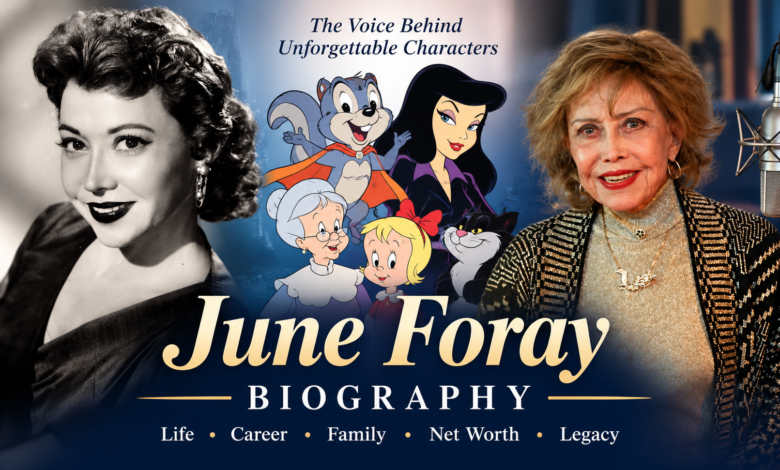
June Foray was one of the most influential voice actresses in American animation history. Over a career spanning childhood radio work in the 1920s to her final professional performances in the 2010s, she helped define the sound of some of the most recognizable animated characters.
Known especially for voicing Rocky the Flying Squirrel and Natasha Fatale in The Rocky and Bullwinkle Show, Foray also became the voice of Granny in the Looney Tunes universe, Cindy Lou Who in How the Grinch Stole Christmas!, Lucifer in Disney’s Cinderella, Jokey Smurf in The Smurfs, Magica De Spell in DuckTales, and many other characters.
Her career was unusual not only for its length but also for its breadth. She worked in radio, film, television, commercials, children’s recordings, animation, video games, and even talking toys. At the same time, she became a passionate advocate for animation as an art form, helping establish institutions and awards that continue to shape the industry.
Although June Foray died in 2017 at the age of 99, her voice remains familiar to millions of viewers.
June Foray Biography at a Glance
- Real name: June Lucille Forer
- Professional name: June Foray
- Born: September 18, 1917
- Birthplace: Springfield, Massachusetts, United States
- Died: July 26, 2017
- Age at death: 99
- Profession: Voice actress and radio personality
- Years active: 1929–2014
- Best known for: Rocky the Flying Squirrel, Natasha Fatale, Granny, Cindy Lou Who, Lucifer, Jokey Smurf and Magica De Spell
- Spouses: Bernard Barondess and Hobart Donovan
- Children: None
- Notable honors: Annie Awards, Daytime Emmy Award, Inkpot Award, Hollywood Walk of Fame star and Television Academy Governors Award
Early Life and Family
June Lucille Forer was born on September 18, 1917, in Springfield, Massachusetts. She was one of three children born to Morris Forer and Ida Robinson Forer.
Her father, Morris, was an engineer and a Jewish immigrant from Odessa, then part of the Russian Empire. Her mother, Ida, had Lithuanian Jewish and French Canadian ancestry. The family lived in Springfield, where June spent her childhood before eventually moving west.
Foray’s interest in performance appeared remarkably early. As a young child, she initially dreamed of becoming a dancer. Her mother encouraged the ambition and enrolled her in local dance classes, although illness eventually forced her to abandon that pursuit.
That setback did not end her interest in performing. Instead, her voice became her most important instrument.
Discovering Radio as a Child
Foray’s professional career effectively began while she was still a child. At 12, she appeared in a local radio drama, and by 15 she was already doing regular radio work.
Her early ability to change voices and portray characters considerably older than herself proved valuable at a time when radio actors were expected to create entire personalities without the benefit of visual performance.
After graduating from Classical High School, Foray moved to Los Angeles with her parents and siblings. Her father’s financial difficulties partly prompted the move and gave the young performer access to the expanding West Coast entertainment industry.
Los Angeles would ultimately become her professional home for the rest of her life.
Education and the Beginning of Her Career
Foray’s formal education culminated at Classical High School in Springfield. Her professional education, however, came largely through radio studios, where she learned to create characters, memorize scripts, and work alongside established performers.
By the late 1930s, she had become the host and performer of her own radio program, Lady Make Believe. She soon appeared on nationally distributed programs and became a dependable character performer.
Radio was an especially important training ground because it required actors to communicate personality almost entirely through voice. Foray developed an extraordinary ability to change pitch, rhythm, accent, and emotional tone, allowing her to portray children, older women, villains, animals, and male characters.
Her radio résumé eventually included programs associated with performers such as Steve Allen, Orson Welles, Lucille Ball, Bob Hope, Edgar Bergen, and many other major figures of the period.
June Foray’s Rise as a Voice Actress
Although Foray was already an established radio performer, animation transformed her career.
During the 1940s, she began doing voice work for animated productions while also appearing in live-action projects and providing dubbing and additional voices. She worked across several major animation studios, including Disney, Warner Bros., Walter Lantz, and Hanna-Barbera.
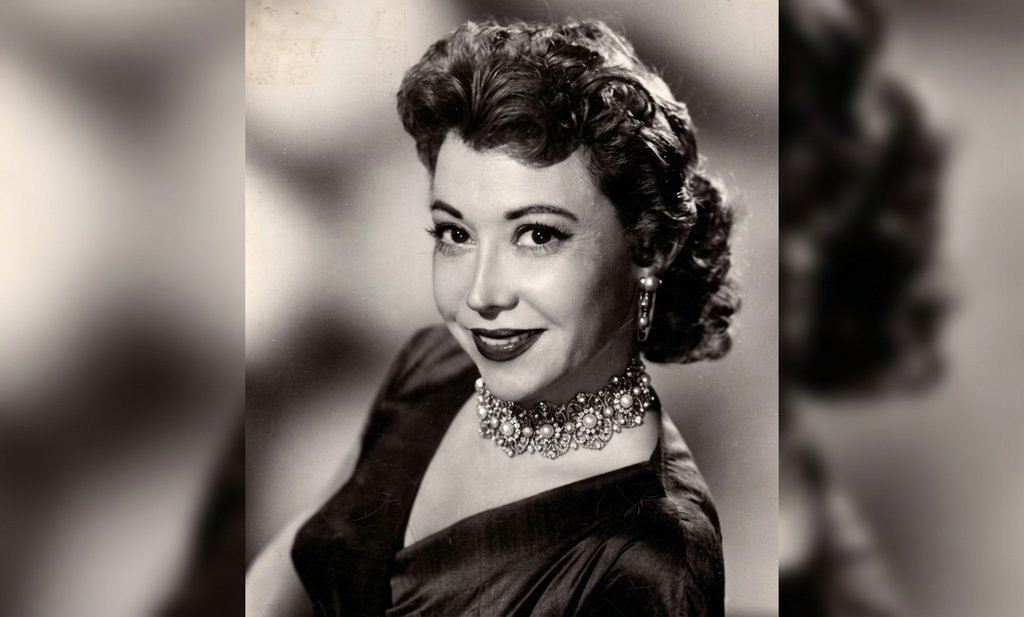
One of her early Disney roles was Lucifer the Cat in Cinderella. She later supplied voices for Peter Pan, Lambert the Sheepish Lion and, decades afterward, Grandmother Fa in Mulan.
Her work showed how effectively she could make a character distinctive even with only a handful of lines.
Granny and the Warner Bros. Years
Foray’s relationship with animator Chuck Jones became particularly important.
After Jones was impressed by her work as Witch Hazel, he invited her to work with Warner Bros. She became closely associated with Granny, the white-haired owner of Tweety and Sylvester, as well as various witch characters.
Foray had actually recorded Granny for records before officially voicing the character in animated cartoons. Her performance eventually became one of the defining interpretations of the character.
At the time, however, voice actors were frequently left uncredited. Unlike some performers whose names became closely associated with cartoon characters, Foray often worked anonymously.
That anonymity makes the scale of her contribution even more remarkable. Audiences heard her voice repeatedly without necessarily knowing who was behind it.
Rocky the Flying Squirrel and Natasha Fatale
For many fans, June Foray’s most famous achievement came with The Rocky and Bullwinkle Show.
She voiced both Rocky the Flying Squirrel and Natasha Fatale, demonstrating the remarkable range that became her trademark.
Rocky was energetic, optimistic, and distinctly youthful, while Natasha was an accented, scheming villain. The two characters sounded completely different, yet both came from the same performer.
Foray later recalled that the idea for the show emerged during a meeting with producer Jay Ward. Her interpretation of Rocky became one of the most recognizable female voice performances in classic American animation, while Natasha’s voice became inseparable from the show’s satirical style.
Her work with the series also placed her alongside performers including Bill Scott and Paul Frees.
Other Famous June Foray Characters
Foray’s résumé extended far beyond Rocky and Natasha.
Among her best-known performances were:
Cindy Lou Who
In the classic television special How the Grinch Stole Christmas!, Foray voiced Cindy Lou Who. The character had relatively little dialogue, but the performance became iconic.
Witch Hazel
Foray’s witch characters demonstrated her gift for comic timing and unusual vocal characterization. Witch Hazel became one of her signature Warner Bros. roles.
Lucifer
As Lucifer in Disney’s Cinderella, Foray contributed to one of Disney’s most memorable villainous animal characters.
Jokey Smurf
She joined the ensemble cast of The Smurfs, voicing Jokey Smurf.
Magica De Spell
Foray also voiced Magica De Spell in DuckTales, adding another memorable villain to her long list of character performances.
Grammi Gummi
In Disney’s Adventures of the Gummi Bears, she played Grammi Gummi, showing that her work could extend beyond comedy and villainy into warm, family-oriented characters.
June Foray and the Talking Toy Industry
Foray’s voice was not limited to movies and television.
In 1960, she provided the original voice for Mattel’s Chatty Cathy doll. The role became particularly notable because she later voiced the sinister talking doll Talky Tina in the famous The Twilight Zone episode “Living Doll.”
The contrast illustrated Foray’s versatility: the same basic concept of a talking doll could be made charming in one setting and disturbing in another.
She also performed extensive commercial and recording work, including projects with comedian and entertainer Stan Freberg.
Her Work Behind the Scenes in Animation
June Foray’s importance to animation went beyond acting.
Beginning in the 1960s, she became increasingly involved in efforts to preserve, promote, and recognize animation as an art form. She helped establish the Hollywood chapter of the International Animated Film Association, known as ASIFA-Hollywood.
She was also instrumental in creating the Annie Awards.
The awards were conceived to give animation its own major platform for recognizing artistic and technical achievement. The June Foray Award was later named in her honor, recognizing individuals who make significant and charitable contributions to the art and industry of animation.
Foray also served on the board of the Academy of Motion Picture Arts and Sciences and spent years advocating for greater recognition of animated films.
Her lobbying contributed to the broader movement that ultimately led to the Academy Award for Best Animated Feature, established in 2001.
In this respect, Foray’s legacy extends beyond her list of characters. She helped strengthen the animation industry’s professional standing.
Awards and Major Honors
Foray received numerous honors during her long career.
She won Annie Awards in 1996 and 1997 for her voice work on The Sylvester & Tweety Mysteries. In 1974, she received an Inkpot Award.
In 2000, she received a star on the Hollywood Walk of Fame recognizing her television voice work.
Her career reached another remarkable milestone in 2012 when she won a Daytime Emmy Award for her performance as Mrs. Cauldron on The Garfield Show. At 94, she became the oldest performer to win an Emmy at that time.
In 2013, she received the Television Academy Governors Award for her extraordinary contribution to the animation industry.
She also received the Comic-Con Icon Award and other industry honors later in her career.
Personal Life, Spouses and Children
June Foray’s personal life was considerably quieter than her professional career.
She married Bernard Barondess in 1941. The marriage ended in divorce.
Foray later met writer Hobart Donovan while working on The Buster Brown Program. Donovan was the program’s principal writer and had also worked on the Buster Brown comic book.
The couple married in 1955 and remained together until Donovan died in 1976.
Foray had no children from either marriage. Reliable public information about her private romantic life after Donovan’s death is also limited, and she generally remained better known for her professional work than for celebrity-style personal publicity.
She was also involved in civic activism. In 1973, she participated in a meat boycott opposing government price controls during the Nixon administration. Her activism resulted in her inclusion on the Nixon administration’s list of political opponents.
Famous Family Members and Siblings
Foray came from a family of three children, but she did not become part of a large Hollywood dynasty.
Reliable biographical sources identify her parents and confirm she had siblings, but they did not achieve comparable public fame in entertainment.
More broadly, her professional family included many of the most important figures in classic animation. She worked with Chuck Jones, Mel Blanc, Jay Ward, Bill Scott, Paul Frees, Stan Freberg, and other major figures across several decades.
June Foray’s Net Worth
Estimates of June Foray’s net worth vary, and no publicly verified financial record establishes an exact figure.
One commonly published estimate places her net worth at about $10 million, but treat celebrity net-worth figures as estimates, not confirmed financial statements.
Foray’s enormous body of work undoubtedly provided income over many decades. Still, her earnings, contracts, royalties, and assets were not publicly documented in a way that lets anyone calculate her final net worth with certainty.
For that reason, $10 million is best described as a reported estimate, not a confirmed figure.
Public Appearances and Social Media
Foray frequently attended animation-related events, festivals, interviews, and industry gatherings, particularly in the later decades of her career.
She appeared at conventions and animation events and gave interviews about her experiences working with legendary animators and performers. She was also active in organizations supporting animation preservation and education.
Modern social media was not a significant part of Foray’s public career. She died in 2017, before platforms such as Instagram and TikTok became central to celebrity promotion.
Therefore, no verified personal Instagram, TikTok, or contemporary social-media presence can reasonably be described as an official account belonging to June Foray today. Fan pages and archival accounts may exist, but they should not automatically be treated as her personal profiles.
Final Years and Death
Foray remained professionally active well into her 90s.
Her final regular television role was as Granny in The Looney Tunes Show. She continued making appearances and voice performances after that, including a later return as Rocky.
In 2012, her Emmy win brought remarkable late-career recognition. In 2013, the Television Academy honored her with its Governors Award.
Her final credited voice role came in 2014, when she reprised Rocky the Flying Squirrel.
Foray died in Los Angeles on July 26, 2017, at the age of 99. She had experienced declining health following an automobile accident in 2015 and died after cardiac arrest.
She was less than two months away from her 100th birthday.
June Foray’s Lasting Legacy
June Foray’s career illustrates how much influence a voice performer can have without necessarily appearing on screen.
Her performances helped establish the personalities of Rocky, Natasha, Granny, Cindy Lou Who, Witch Hazel, Jokey Smurf, Magica De Spell, and numerous other characters. Her voice could be mischievous, elderly, innocent, sinister, energetic, or authoritative, often within the same production.
But her most important legacy may extend beyond individual characters.
Foray helped advocate for animation as a serious creative medium, supported professional organizations and contributed to the development of awards recognizing animation. Her influence therefore exists on two levels: in the characters audiences remember, and in the industry she helped strengthen.
Her career lasted roughly eight and a half decades, an extraordinary span by any standard. She began performing on radio as a child and kept recording professionally into her nineties.
That longevity is only part of what makes her biography remarkable. June Foray did not simply participate in the golden age of American animation. She helped give it a voice.
Frequently Asked Questions About June Foray
What was June Foray’s real name?
June Foray’s birth name was June Lucille Forer. She adopted the professional surname Foray during her entertainment career.
When and where was June Foray born?
June Foray was born on September 18, 1917, in Springfield, Massachusetts.
How old was June Foray when she died?
June Foray was 99 years old when she died on July 26, 2017, in Los Angeles, California.
What was June Foray famous for?
She was best known for voicing Rocky the Flying Squirrel and Natasha Fatale in The Rocky and Bullwinkle Show. Other famous roles included Granny, Cindy Lou Who, Witch Hazel, Lucifer, Jokey Smurf, and Magica De Spell.
Who was June Foray married to?
June Foray first married Bernard Barondess in 1941 until their divorce. She later married Hobart Donovan in 1955, and they remained married until he died in 1976.
Did June Foray have children?
No. June Foray had no children from either marriage.
What was June Foray’s net worth?
Some entertainment websites estimate her net worth at around $10 million, but no publicly verified financial statement confirms that figure. It should therefore be regarded as an estimate rather than a confirmed amount.
June Foray’s story remains one of the defining biographies of American voice acting: a performer who began in radio as a child, became a cornerstone of classic animation, and continued working almost to the end of her life. Her characters remain recognizable decades after their original appearances, while the institutions and awards she helped establish continue to influence the animation industry.




One Comment