
Albino Gecko Leopard: History, Genetics, Appearance, Care and Life in the Reptile World

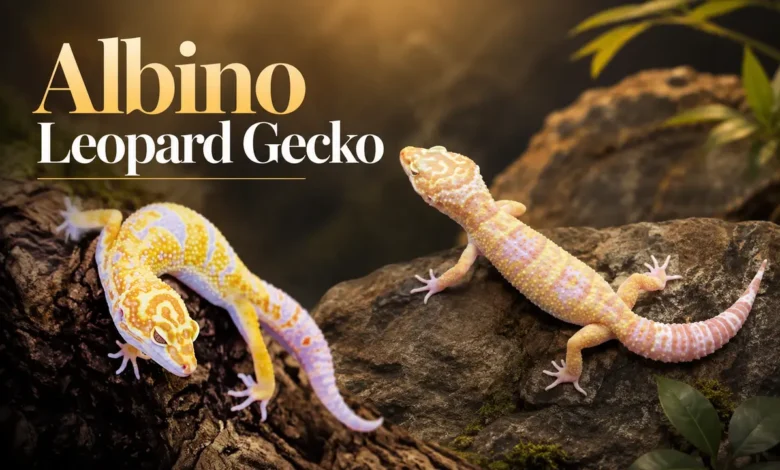
The Albino Gecko Leopard has become one of the most recognizable and sought-after varieties in the reptile-keeping world. With its pale body, warm yellow and orange tones, reduced dark pigmentation, and distinctive eyes, this unusual-looking gecko has attracted generations of breeders, collectors, and first-time reptile enthusiasts.
Unlike a celebrity or a famous individual animal, however, “albino leopard gecko” does not refer to one particular gecko. It is a broad term used for leopard geckos carrying specific genetic mutations that produce an albino appearance. As a result, the animal as a whole has no single real name, birth date, birthplace, family tree, spouse, children, education, career, or personal net worth.
Instead, the story of the albino leopard gecko is the story of genetics, selective breeding, reptile enthusiasts, and the development of some of the most recognizable leopard gecko morphs in the captive-breeding community.
What Is an Albino Gecko Leopard?
An albino leopard gecko is a genetic color morph of the leopard gecko, scientifically known as Eublepharis macularius.
The term “albino” generally refers to reduced melanin production. Melanin is responsible for much of the dark pigmentation found in reptiles and other animals. In albino leopard geckos, genetic changes affect pigmentation and produce a much lighter appearance than the standard leopard gecko.
However, albino does not mean completely white.
Many albino leopard geckos have combinations of yellow, orange, cream, lavender, pink, peach, and light brown. Their spots may be brown or chocolate rather than the black markings normally associated with a wild-type leopard gecko.
This color combination is one of the main reasons the morph has become so popular.
The Scientific Background of the Leopard Gecko
Natural History
The leopard gecko is a terrestrial reptile native to parts of South Asia. It has evolved to live in relatively dry environments and is well adapted to life on the ground.
Unlike many gecko species, leopard geckos have movable eyelids. They also possess small claws rather than the specialized adhesive toe pads seen in many climbing geckos.
Their stocky bodies, broad heads, patterned skin, and thick tails have made them particularly recognizable among captive reptiles.
From Wild Gecko to Captive Favorite
People have kept and bred leopard geckos in captivity for decades. Their manageable size, generally calm nature, distinctive appearance, and relatively straightforward husbandry helped establish them as one of the most popular pet reptiles.
As breeding programs expanded, breeders began to notice naturally occurring genetic variations.
Breeders learned that certain traits could be passed from parents to offspring. Through careful breeding, breeders could maintain and combine these traits to create new colors and patterns.
The albino leopard gecko became one of the most important developments in this process.
The History of the Albino Gecko Leopard
The history of modern Albino Gecko Leopard is tied to the development of specialized leopard gecko breeding programs in the late twentieth century.
Rather than being created artificially, albino traits originated from genetic mutations that appeared within captive populations. Breeders then worked to preserve those mutations and establish stable lines.
Three major albino strains eventually became recognized in the leopard gecko hobby:
- Tremper Albino
- Rainwater Albino
- Bell Albino
Although all three can produce an albino appearance, they are genetically distinct.
This distinction is important because two leopard geckos can look similar while carrying different genetic mutations.
Tremper Albino Gecko Leopard
The Tremper Albino is widely regarded as the first established albino leopard gecko strain in the modern hobby.
The line is associated with reptile breeder Ron Tremper. During the 1990s, Tremper worked with unusual leopard geckos displaying reduced pigmentation and conducted breeding experiments to determine how the trait was inherited.
One important animal in the line’s history was a gecko known as Bubba. Through breeding and subsequent generations, the albino trait became a reproducible genetic characteristic.
The Tremper Albino eventually became one of the most influential leopard gecko genetic lines.
Its importance extends beyond albino coloration. Breeders later combined Tremper Albino genetics with other traits to create increasingly complex morphs.
Appearance of Tremper Albinos
Tremper Albinos can display:
- Yellow coloration
- Orange pigmentation
- Cream tones
- Lavender shades
- Brown markings
- Light eyes
- Reduced black pigmentation
Individual animals can look considerably different from one another.
Rainwater Albino
The Rainwater Albino, sometimes called the Las Vegas Albino, is another independently established albino line.
This strain is associated with breeder Tim Rainwater.
Rainwater Albinos are often recognized for their soft coloration and relatively subtle contrast. Depending on genetics, an individual may have pale yellow, cream, pink, lavender, or orange tones.
Like the Tremper Albino, the Rainwater trait is genetically inherited and recessive.
The existence of multiple albino strains demonstrates why appearance alone is not always enough to determine a leopard gecko’s genetic background.
Bell Albino
The third major albino strain is the Bell Albino, associated with breeder Mark Bell.
Bell Albinos can display distinctive pink, lavender, yellow, and orange tones. Their eyes are often described as pinkish or reddish.
The Bell Albino is also genetically distinct from the Tremper and Rainwater strains.
For breeders, this distinction matters because combining two different albino strains does not necessarily produce visible albino offspring.
Albino Gecko Leopard Genetics Explained
Understanding the genetics behind Albino Gecko Leopard can make their history easier to understand.
What Does Recessive Mean?
The major Albino Gecko Leopard strains are recessive traits.
In simplified terms, a leopard gecko usually needs to inherit two copies of the relevant genetic mutation—one from each parent—to express the albino trait visibly.
A gecko carrying only one copy may look completely normal.
Breeders commonly describe such an animal as a “het,” meaning it carries the gene without visibly expressing the trait.
When breeders cross two compatible carriers, they may produce visibly albino offspring.
Why the Three Strains Are Different
Tremper, Rainwater, and Bell Albino are not simply three names for the same mutation.
They represent separate genetic lines.
This is one of the most interesting aspects of leopard gecko genetics. Two animals can both look albino but possess different genetic backgrounds.
For breeders, maintaining accurate records is therefore extremely important.
Appearance and Physical Characteristics
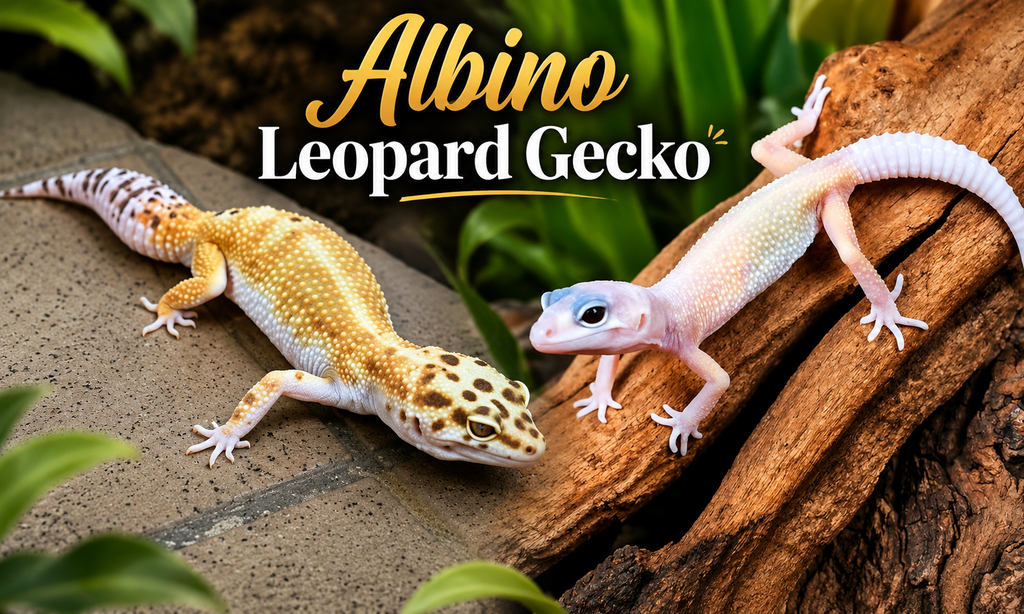
The appearance of an Albino Gecko Leopard can vary considerably depending on its genetic background.
A standard leopard gecko often has strong yellow coloration combined with dark spots and bands. Albino morphs generally show reduced dark pigmentation.
Some individuals are predominantly pale yellow, while others have orange or lavender coloration.
Their tails can also display attractive bands and patterns.
The eyes are another noticeable characteristic. Because the genetic mutation affects pigmentation, albino gecko leopard may have lighter-looking eyes than standard leopard geckos.
However, not every albino animal looks identical.
This variation partly explains the continued popularity of albino gecko leopard among breeders.
Early Life and Hatchling Development
No single childhood story applies to an albino gecko leopard because the term describes a genetic category rather than one individual animal.
Albino gecko leopard begin life as hatchlings after emerging from eggs.
Their appearance can change as they grow.
Young leopard geckos may have stronger bands or patterns that become less pronounced as they mature. Colors can also become more intense or softer over time.
Breeders often maintain detailed records of hatch dates, parentage, genetic traits, and developmental changes.
For individual animals, these records can provide a detailed life history.
Parents and Family
No universal family tree exists for albino gecko leopard.
Each individual has its own biological parents, and breeders may know an animal’s complete genetic history for several generations.
The broader “family” of albino gecko leopard is better understood through their established genetic lines.
Tremper, Rainwater, and Bell represent three important branches of this history.
Thousands of individual geckos have descended from breeding programs involving these lines.
Siblings and Offspring
Individual albino gecko leopard can have siblings from the same breeding pair, but no universally recognized group of siblings belongs to the morph itself.
Likewise, albino gecko leopard can reproduce and produce offspring, but the offspring depend on both parents’ genetics.
This matters especially when breeding different morphs because visual appearance does not always reveal all of an animal’s inherited genes.
Education and Career
The concepts of education and career do not apply literally to leopard geckos.
An albino gecko leopard does not attend school or hold a profession.
Its significance comes from its role in captive breeding.
The breeders who developed and maintained albino lines spent years learning about inheritance, husbandry, animal health, coloration, and genetic combinations.
In that sense, the albino gecko leopard became an important subject in hobbyists’ informal study of reptile genetics.
Personality and Behavior
Albino coloration does not automatically determine a leopard gecko’s personality.
Individual temperament varies.
Some leopard geckos become comfortable with gentle handling and may calmly explore their surroundings. Others are more cautious and prefer to remain inside their hides.
Young animals can also be more nervous than adults.
A leopard gecko’s behavior is influenced by its environment, age, handling history, health, enclosure design, and individual temperament.
The color morph is only one part of the animal.
Activity Patterns
Leopard geckos are generally most active around dusk and at night, although captive individuals can adjust their activity to their environment.
During the day, they commonly spend time inside hides or sheltered areas.
Their behavior can include exploring, hunting, climbing over low surfaces, and searching for food.
Albino Leopard Gecko Care
Although albino gecko leopard share many care requirements with other leopard geckos, owners should pay attention to their reduced pigmentation.
Temperature
A properly designed enclosure should provide an appropriate temperature gradient, allowing the animal to move between warmer and cooler areas.
This allows the gecko to regulate its body temperature through normal reptile behavior.
Hiding Places
Hides are particularly important because leopard geckos naturally seek secure spaces.
A well-designed enclosure should provide multiple areas where the animal can retreat.
Diet
Leopard geckos are insectivorous.
Common feeder insects include appropriately sized crickets, superworms, dubia roaches, and other suitable feeder insects.
Keep nutrition balanced, and supplement according to established reptile-care practices.
Lighting
Albino leopard geckos may be more sensitive to bright light because of their reduced pigmentation.
Shaded areas are therefore especially important.
Owners should avoid exposing the animal to unnecessarily intense lighting.
Veterinary Care
Like all reptiles, leopard geckos can develop health problems.
Changes in appetite, weight, activity, skin condition, eyes, digestion, or behavior can indicate a need for veterinary attention.
A veterinarian experienced in reptile medicine is the most appropriate professional for diagnosing and treating health problems.
Why Are Albino Leopard Geckos So Popular?
Their popularity comes from several factors.
First is appearance.
The combination of pale skin, yellow and orange coloration, unusual patterns, and light-colored eyes makes albino leopard geckos visually distinctive.
Second is genetics.
Breeding programs can incorporate albino traits alongside other leopard gecko characteristics.
Third is temperament.
Leopard geckos are generally considered manageable captive reptiles, making them attractive to both experienced keepers and people entering the hobby.
The combination of appearance, genetics, and manageable size has helped the albino leopard gecko maintain a strong position in the reptile community.
Famous Breeders and the Development of Albino Lines
Although no individual albino leopard gecko is a conventional celebrity, several breeders have become important figures in developing the major albino strains.
Ron Tremper is associated with the Tremper Albino.
Tim Rainwater is associated with the Rainwater Albino.
Mark Bell is associated with the Bell Albino.
Their breeding work helped develop modern leopard gecko genetics.
These breeders’ names are therefore closely tied to the morph’s history, even though the animals themselves remain the central subject.
Public Appearances and Social Media
No official social-media personality is known simply as “Albino Leopard Gecko.”
Instead, individual owners, breeders, reptile businesses, and animal enthusiasts regularly share photographs and videos of albino gecko leopard.
Social media has played a major role in increasing public awareness of unusual reptile morphs.
Photographs can quickly introduce people to new combinations of colors and patterns, while breeders use online communities to discuss genetics and husbandry.
However, online photographs can sometimes make it difficult to determine an animal’s exact genetic background.
For that reason, pedigree and breeding records are often more reliable than appearance alone.
Net Worth and Market Value
An albino gecko leopard does not have a personal net worth.
Individual animals, however, can have different market values.
Price can depend on factors such as:
- Albino strain
- Age
- Sex
- Genetic combination
- Coloration
- Pattern
- Breeder reputation
- Lineage
- Rarity
- Demand
A simple albino gecko leopard may cost considerably less than an animal with several desirable traits.
Because prices change with supply and demand, no single universal value exists for an albino gecko leopard.
Life Today
Today, albino gecko leopard remain an important part of the leopard gecko breeding community.
The Tremper, Rainwater, and Bell lines continue to influence captive breeding, while combinations involving albino genetics have contributed to an increasingly diverse range of leopard gecko morphs.
The story of the albino gecko leopard is therefore not the biography of one famous animal.
It is a story of genetic variation and how reptile breeders transformed unusual natural mutations into stable, recognizable captive-bred traits.
From the earliest albino discoveries to today’s complex breeding programs, these geckos show how genetics can shape a species’ appearance across generations.
At the same time, responsible reptile keeping still prioritizes animal welfare, accurate genetic records, appropriate enclosure conditions, nutrition, and long-term health over appearance alone.
Frequently Asked Questions
Is an albino leopard gecko a separate species?
No. An albino leopard gecko is a genetic color morph of the leopard gecko, scientifically known as Eublepharis macularius.
How many major albino leopard gecko strains are there?
There are three widely recognized major albino strains: Tremper Albino, Rainwater Albino, and Bell Albino.
Who developed the Tremper Albino?
The Tremper Albino is associated with reptile breeder Ron Tremper, whose breeding work helped establish the first widely recognized albino leopard gecko line.
Are albino leopard geckos completely white?
No. Most albino leopard geckos retain significant coloration. Yellow, orange, cream, pink, lavender, and light brown are among the colors that can appear.
Do albino leopard geckos have red eyes?
Eye coloration varies. Some albino leopard geckos can have pinkish or reddish-looking eyes, while others have lighter but less obviously red eyes.
Are albino leopard geckos rare?
They are no longer considered exceptionally rare within the captive reptile community. However, particular genetic combinations and breeding lines can still be uncommon.
Are albino leopard geckos good pets?
Leopard geckos are widely kept as captive reptiles, but ownership requires proper knowledge of enclosure design, temperature, diet, supplementation, handling, and veterinary care. Individual temperament also varies.
What is the difference between Tremper, Rainwater, and Bell Albino?
All three produce albino appearances, but they are genetically distinct lines. Their coloration, eye appearance, and behavior in breeding projects can differ, making accurate genetic records important.
Does an albino leopard gecko have a specific real name?
No. “Albino leopard gecko” describes a genetic morph, not a specific animal. Individual geckos may have names given to them by breeders or owners.
What is the lifespan of an albino leopard gecko?
An individual’s lifespan varies based on genetics, husbandry, nutrition, health, and veterinary care. Properly cared-for leopard geckos can live for many years in captivity.

MEYJYTJY8484MARETRYTR