Michelin Star Restaurants Denver: A Complete Guide to the City’s Standout Dining Scene

Denver’s reputation as a serious food destination has grown rapidly in recent years, and the arrival of the MICHELIN Guide in Colorado has helped put the city firmly on the national culinary map. Once known primarily for craft beer, steakhouses, green chile, and an increasingly ambitious farm-to-table movement, Denver now includes some of the Mountain West’s most technically accomplished tasting-menu restaurants.
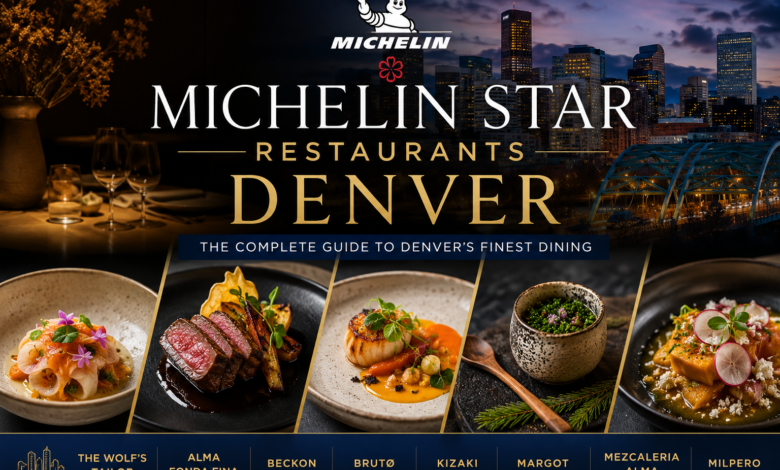
As of the 2026 MICHELIN Guide Colorado selection, Denver has one restaurant with two MICHELIN Stars and seven restaurants with one MICHELIN Star. The Wolf’s Tailor holds the city’s only two-star distinction, while Alma Fonda Fina, Beckon, Brutø, Kizaki, Margot, Mezcaleria Alma and Milpero each hold one star.
The result is a remarkably diverse collection. Michelin star restaurants Denver range from contemporary tasting menus and Japanese omakase to Mexican cooking rooted in family traditions. Together, they illustrate how the city has developed a culinary identity of its own.
What Does a MICHELIN Star Mean?
A MICHELIN Star is one of the most recognized distinctions in the restaurant world. Michelin inspectors evaluate restaurants anonymously and concentrate on the quality of the cooking rather than luxury, popularity, or celebrity status.
The Guide considers factors including ingredient quality, mastery of technique, harmony of flavors, the chef’s personality expressed through the food, and consistency.
One MICHELIN Star generally recognizes high-quality cooking that is worth a stop. Two Stars indicate excellent cooking worth a detour, while three Stars represent exceptional cuisine worthy of a special journey.
Denver’s restaurants have made a particularly strong impression because many combine sophisticated technique with Colorado ingredients and global influences.
Denver’s Michelin Guide Era
Colorado entered the MICHELIN Guide for the first time in 2023. The arrival marked an important moment for the state’s restaurant industry, giving Denver and other Colorado culinary destinations an internationally recognized platform.
The early selections demonstrated that Colorado was more than a destination for mountain resorts and outdoor recreation. Denver, Boulder, and Aspen were increasingly able to compete for attention on the strength of their restaurants.
The 2025 edition brought another major milestone when The Wolf’s Tailor became Colorado’s first two-Michelin-star restaurant.
By September 2026, Denver had expanded its Michelin-starred group to eight restaurants. Milpero became the newest Denver restaurant to receive a star, joining seven established starred destinations.
The Wolf’s Tailor: Denver’s Two-Star Standout
A Historic Achievement for Colorado
The Wolf’s Tailor currently occupies the highest Michelin position in Denver. In 2025, it became the first restaurant in Colorado to earn two MICHELIN Stars, elevating it from the one-star recognition it received when the Colorado Guide debuted.
Located in Denver’s Sunnyside area, the restaurant is closely associated with chef Taylor Stark and a culinary philosophy built around creativity, sustainability, and regional sourcing.
Its food does not fit neatly into one traditional category. Instead, the kitchen draws from different culinary influences while emphasizing Colorado ingredients and sophisticated techniques.
A Menu Built Around Creativity
The Wolf’s Tailor is known for ambitious multicourse dining. Dishes can combine unexpected ingredients and international influences while staying strongly connected to the region.
Michelin has highlighted examples such as Berkshire pork dumplings with turmeric and dill broth and Colorado bison paired with apricot and grilled zucchini.
Sustainability is another important part of the restaurant’s identity. The kitchen emphasizes whole-ingredient utilization, preservation, fermentation, and local sourcing.
That combination of creativity and environmental awareness has helped make The Wolf’s Tailor one of Denver’s most distinctive Michelin-starred restaurants.
Alma Fonda Fina
Alma Fonda Fina represents another side of Denver’s Michelin story. Rather than imitating European fine-dining traditions, chef Johnny Curiel draws heavily on Mexican culinary heritage and his upbringing in Guadalajara.
Curiel began working in his family’s restaurant at a young age and later developed his skills through professional culinary training and high-end kitchens.
That background is important to understanding Alma Fonda Fina. The restaurant combines familiar Mexican flavors with contemporary techniques and carefully selected ingredients.
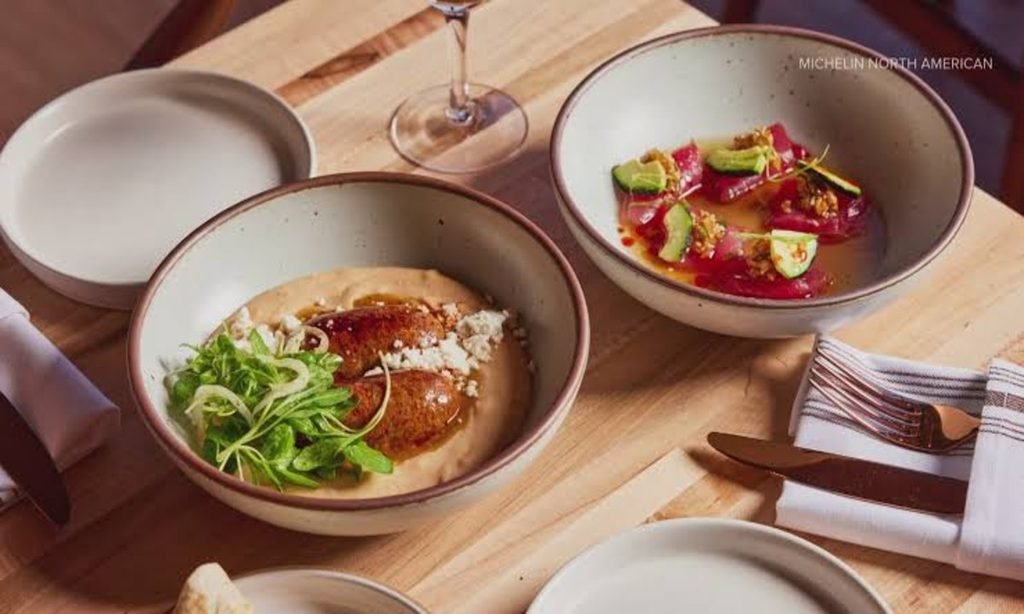
Its menu has included dishes such as roasted scallops with tomato butter and serrano ponzu, agave-roasted sweet potato, and creative seafood preparations.
The restaurant demonstrates how Mexican cuisine can be presented through a refined contemporary lens without losing its cultural foundation.
Beckon
Beckon is one of Denver’s best-known Michelin-starred tasting-menu experiences. Located in the RiNo neighborhood, the restaurant centers on an intimate counter where guests can watch the kitchen at work.
Chef Duncan Holmes leads the culinary program, which changes with the seasons.
The restaurant places considerable emphasis on produce, and its own one-acre farm contributes ingredients to the kitchen. Vegetables are treated as important components rather than simple accompaniments.
Beckon’s style is contemporary and highly polished, with carefully constructed dishes, precise presentations, and a strong focus on seasonal ingredients.
For diners who enjoy the theater of an open kitchen, the intimate counter format adds another dimension to the experience.
Brutø
Brutø has developed a reputation for experimentation, live-fire cooking and fermentation.
Located in Denver’s Dairy Block, the restaurant operates around a chef’s counter and focuses on an ambitious tasting-menu format. Its cooking combines Colorado agriculture with international influences, including Japanese and Nordic ideas.
Fire is central to the restaurant’s culinary identity. Ingredients cooked over the hearth acquire flavors that are difficult to reproduce through conventional methods.
Fermentation is equally important. Brutø has developed a dedicated research and development space where the team experiments with ingredients, preservation, and fermentation techniques.
The restaurant has also emphasized waste reduction and relationships with Colorado farmers.
Its Michelin recognition reflects a broader trend in Denver’s fine-dining scene: sophisticated cooking increasingly intersects with agriculture, sustainability, and experimentation.
Kizaki
Kizaki brings a different culinary tradition to Denver’s Michelin-starred landscape.
Chef Toshi Kizaki has spent more than four decades in the sushi world, making him a veteran figure in Denver’s Japanese dining scene.
The restaurant focuses on high-end sushi and omakase, combining traditional Japanese techniques with modern touches.
Kizaki’s recognition matters because it shows the depth of Denver’s Japanese food culture. The city is not simply developing contemporary American tasting menus; it is also supporting specialists who have spent decades mastering particular culinary traditions.
The intimate counter experience puts the chef’s technique and seafood quality front and center.
For diners interested in traditional sushi craftsmanship, Kizaki offers one of Denver’s most specialized Michelin-starred experiences.
Margot
Margot is another example of how Denver’s Michelin restaurants can emerge from smaller, highly personal concepts.
Chef Justin Fulton developed Margot through a pop-up before establishing it as a permanent restaurant. The restaurant operates with an unusually intimate eight-seat counter.
Its food is contemporary and seasonal, with Colorado ingredients combined with influences from different culinary traditions.
The small format allows the restaurant to create a particularly personal dining experience. Guests are close to the cooking process, while the kitchen can maintain a tightly controlled tasting menu.
Michelin’s recognition of Margot also illustrates an important shift in modern fine dining: a restaurant doesn’t need a large dining room or grand hotel setting to produce ambitious cuisine.
Mezcaleria Alma
Mezcaleria Alma adds another Mexican voice to Denver’s Michelin-starred group.
Its recognition alongside Alma Fonda Fina highlights the increasing importance of Mexican cuisine within Denver’s fine-dining identity.
The restaurant combines Mexican culinary influences with a contemporary approach, while its beverage program contributes significantly to the overall experience.
Mezcaleria Alma’s inclusion is especially notable because Michelin recognition in Denver is not limited to French-inspired or contemporary European cooking.
Instead, the city’s Mexican restaurants are demonstrating that regional traditions, agave spirits, and modern culinary techniques can form the foundation of sophisticated Michelin-level dining.
Milpero
Milpero is the newest addition to Denver’s Michelin-starred restaurants in the 2026 selection.
Its arrival reflects the continued evolution of Denver’s Mexican culinary scene and the growing diversity of the city’s Michelin-recognized restaurants.
Receiving a star in a newer Michelin market is a significant achievement because restaurants are being evaluated alongside an increasingly competitive group of established culinary destinations.
Milpero’s recognition gives Denver another high-end Mexican restaurant to add to a group that already includes Alma Fonda Fina and Mezcaleria Alma.
What Makes Denver’s Michelin Scene Different?
Denver’s Michelin-starred restaurants share certain characteristics, but no single style defines the city.
Instead, several themes appear repeatedly.
Colorado Ingredients
Local agriculture plays an important role in the city’s modern fine-dining movement. Chefs increasingly use regional produce, grains, meat, and other ingredients as the foundation for sophisticated menus.
Mexican Culinary Influence
Mexican cuisine has become particularly important to Denver’s Michelin identity. Alma Fonda Fina, Mezcaleria Alma and Milpero demonstrate how Mexican traditions can be interpreted through contemporary fine dining.
Intimate Dining
Several Michelin-starred restaurants favor small counters or intimate rooms rather than large dining spaces.
Beckon, Kizaki, Brutø and Margot all provide formats where diners can observe chefs and kitchen teams closely.
Sustainability and Fermentation
For some Denver restaurants, sustainability is more than a marketing concept. The Wolf’s Tailor and Brutø, in particular, have built preservation, fermentation, and waste reduction into their culinary philosophies.
This approach fits naturally with Colorado’s strong agricultural identity.
Michelin Stars and Denver’s Culinary Reputation
The Michelin Guide has changed how food travelers view Denver.
Before Michelin arrived, Denver already had a thriving restaurant culture. The city had developed a reputation for independent restaurants, breweries, contemporary Western cooking, and strong international food communities.
Michelin recognition gave that scene another level of visibility.
It also helped demonstrate that Denver’s food culture could be distinctive rather than simply an extension of culinary trends from New York, Los Angeles, Chicago, or San Francisco.
Denver’s strongest restaurants increasingly tell stories about Colorado through ingredients, cultural heritage, and personal experiences.
Are Michelin Star Restaurants Denver Expensive?
Many of Denver’s Michelin-starred restaurants sit at the high end of the market, particularly those offering elaborate tasting menus.
However, Michelin recognition itself does not determine a restaurant’s price.
The Guide also recognizes restaurants with Bib Gourmand awards, which highlight establishments offering good-quality food at a more accessible value. Denver has a broader Michelin selection beyond the starred restaurants, giving diners options at different price levels.
For travelers, this means a Michelin-focused Denver food trip doesn’t have to consist entirely of expensive tasting menus.
Celebrity Chefs and Public Recognition
Unlike some major culinary cities, Denver’s Michelin scene isn’t built primarily around celebrity chefs known from television.
Instead, many of its leading chefs have earned recognition through years of cooking, restaurant ownership, and experimentation.
Johnny Curiel, Taylor Stark, Duncan Holmes, Toshi Kizaki and Justin Fulton represent different generations and culinary backgrounds.
Their stories also demonstrate the variety within Denver’s restaurant industry, from family-based Mexican cooking to Japanese sushi mastery and contemporary experimental cuisine.
Social Media and the Modern Denver Dining Experience
Social media has become an important part of how diners discover Denver restaurants.
Instagram, TikTok, and other platforms frequently showcase tasting-menu presentations, chef counters, restaurant interiors, and seasonal dishes.
For Michelin-starred restaurants, however, social media does not replace the dining experience.
Menus change, ingredients are seasonal, and many restaurants deliberately keep parts of their culinary programs flexible.
Diners should therefore view online photographs as inspiration rather than a guarantee that a particular dish will be served during a future visit.
Life Today: The Current Denver Michelin Landscape
As of the 2026 Michelin Guide Colorado selection, Denver has the largest concentration of Michelin-starred restaurants in the state.
The Wolf’s Tailor leads the group with two Stars, while seven restaurants hold one Star: Alma Fonda Fina, Beckon, Brutø, Kizaki, Margot, Mezcaleria Alma and Milpero.
The broader Colorado selection has also expanded beyond Denver, with Michelin recognition now reaching additional cities and resort destinations.
That expansion makes Denver even more interesting as a culinary destination. The city is no longer competing only with other urban restaurant markets; it is part of a wider Colorado food ecosystem that stretches from the Front Range to mountain communities.
For visitors, the appeal is clear: Denver offers ambitious cooking, regional ingredients, international influences, and increasingly sophisticated hospitality.
Frequently Asked Questions
How many Michelin-starred restaurants are in Denver?
As of the 2026 MICHELIN Guide Colorado selection, Denver has eight Michelin-starred restaurants. The Wolf’s Tailor has two Stars, while seven others have one Star each.
Which Denver restaurant has two Michelin Stars?
The Wolf’s Tailor is currently Denver’s only two-Michelin-Star restaurant. It became Colorado’s first two-star restaurant in the 2025 Michelin Guide selection.
What are the one-Michelin-Star restaurants in Denver?
The current one-star Denver restaurants are Alma Fonda Fina, Beckon, Brutø, Kizaki, Margot, Mezcaleria Alma, and Milpero.
Does Denver have Michelin-starred Mexican restaurants?
Yes. Alma Fonda Fina, Mezcaleria Alma, and Milpero are all Michelin-starred Denver restaurants associated with Mexican cuisine.
What is the most famous Michelin restaurant in Denver?
The Wolf’s Tailor is arguably Denver’s most prominent Michelin restaurant because it currently holds two Stars and was the first restaurant in Colorado to reach that level.
Are Michelin restaurants in Denver expensive?
Many Michelin-starred restaurants are expensive because they offer tasting menus, premium ingredients, and highly specialized service. However, Denver’s wider Michelin selection includes restaurants at different price levels, including Bib Gourmand destinations recognized for good food and value.
When did Michelin first come to Colorado?
Michelin Star Restaurants Denver, The MICHELIN Guide first launched its Colorado selection in 2023. Since then, the state’s restaurant scene has expanded its Michelin recognition, with Denver becoming one of the state’s most important culinary centers.
Is Denver a good destination for food lovers?
Yes. Denver offers a broad restaurant scene ranging from Michelin-starred tasting menus and sushi to Mexican cuisine, contemporary restaurants, neighborhood dining, and Bib Gourmand selections. Its combination of local agriculture and international culinary influences makes it an increasingly significant food destination.
Final Thoughts
The story of Michelin star restaurants Denver is ultimately a story about a city discovering and refining its culinary identity.
The current Michelin-starred group is diverse rather than uniform. The Wolf’s Tailor represents ambitious contemporary cooking and sustainability. Kizaki showcases decades of Japanese culinary expertise. Alma Fonda Fina, Mezcaleria Alma and Milpero demonstrate the growing importance of Mexican cuisine. Beckon and Margot emphasize intimate tasting-menu experiences, while Brutø pushes experimentation through live fire, fermentation and Colorado agriculture.
Together, these restaurants show why Denver has become one of the most exciting food cities in the American West.
Michelin Star Restaurants Denver, The Michelin Guide has given the city an international spotlight, but the restaurants themselves are what sustain that reputation. As Denver’s culinary community continues to evolve, its Michelin scene is likely to remain one of the most closely watched parts of Colorado’s growing food culture.