Lock Ring: Meaning, History, Types, Uses, and Why This Small Component Matters

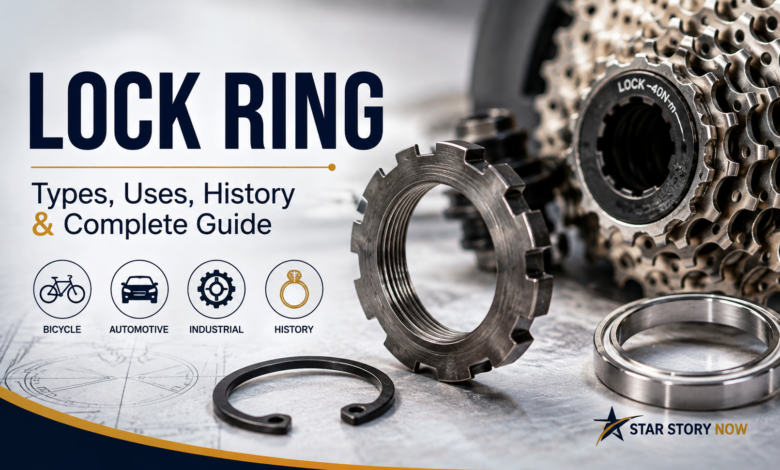
A lock ring is a small but important component found in mechanical systems, bicycles, vehicles, industrial equipment, and even historical artefacts. Despite its simple circular appearance, the term “lock ring” can describe several different kinds of objects, depending on the context.
Unlike a celebrity or public figure, a lock ring has no personal biography, family history, age, or social-media presence. Instead, its story is one of engineering, mechanical design, practical function, and historical development. To understand the term, consider how lock rings have been designed and used over time.
In modern engineering, a lock ring generally keeps another component securely positioned. It may prevent movement, hold a bearing in place, secure a bicycle cassette, retain a component on a shaft, or help form a locking mechanism. In another context, the term refers to an unusual type of Late Bronze Age gold ornament discovered in Ireland and other parts of Europe.
This article explores the meaning of locks ring, its history, applications, construction, common types, and why such a small component can play an important role in larger systems.
What Is a Lock Ring?
A lock ring is broadly a circular mechanical or decorative component designed to secure, retain, or lock another object in position.
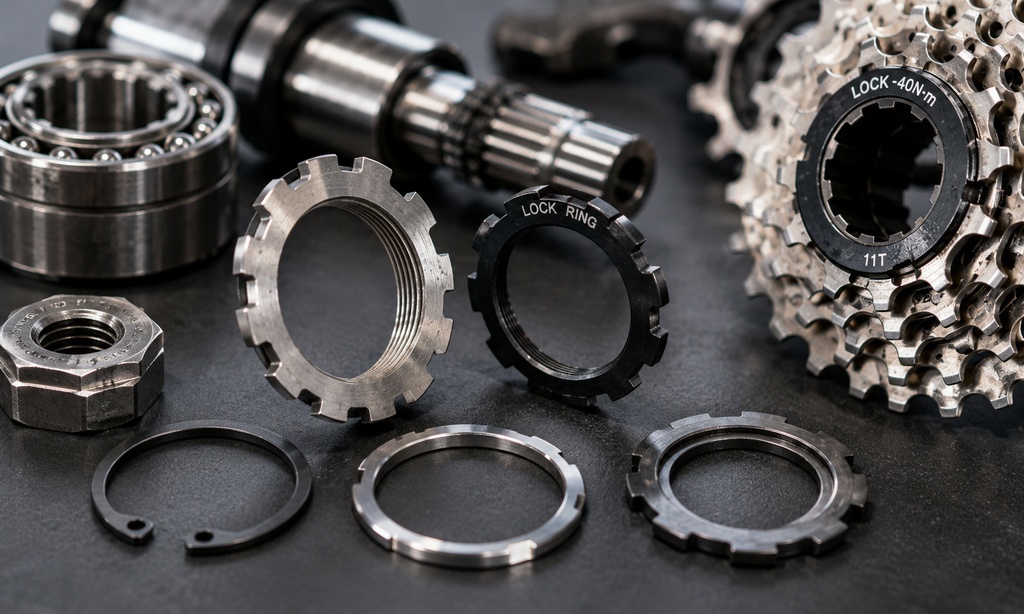
The exact design depends on its application. Some lock rings are threaded and tightened onto another component. Others fit into grooves and prevent axial movement. Bicycle lock rings, for example, secure a cassette of sprockets to a freehub body.
In engineering terminology, lock rings are closely related to retaining rings, snap rings, circlips, and other fastening components. However, these terms are not always interchangeable because their designs and functions can differ.
The basic idea remains straightforward: a lock ring helps prevent unwanted movement or separation.
Why Is a Lock Ring Important?
Mechanical systems often experience vibration, lock ring rotation, pressure, friction, and repeated loading. A component that appears firmly positioned when stationary can gradually shift under these forces.
A lock ring provides a relatively simple way to control that movement.
Depending on the design, it can:
- Hold components against a shoulder or flange
- Prevent axial movement
- Secure rotating parts
- Keep bearings in their intended position
- Hold bicycle cassette sprockets together
- Assist in closing or locking mechanical assemblies
- Prevent components from becoming displaced during operation
Because of these functions, lock rings appear in applications ranging from bicycles to automobiles and industrial machinery.
The Different Meanings of Lock Ring
One reason the term can be confusing is that “lock ring” doesn’t refer to a single universal component.
Mechanical Lock Rings
In mechanical engineering, the term can describe a ring that positions or retains a component on a shaft or inside a housing. Some designs fit into specially machined grooves.
These rings are particularly useful when designers need to control axial movement without adding a large shoulder, nut, or other bulky component.
Bicycle Lock Rings
Bicycle mechanics are another major area where the term appears.
On many modern bicycles, a lock ring secures the rear cassette to the freehub body. The ring threads onto the sprocket assembly and is tightened against it.
Manufacturers such as Shimano specify dedicated tools to install and remove these components. Shimano documentation, for example, describes using lock-ring tools during cassette installation and removal.
Wheel and Bearing Lock Rings
Lock rings are also used in automotive applications. Wheel-bearing assemblies may contain retaining or lock-ring components designed to keep bearings or related parts in position.
Automotive parts catalogues list locks rings for specific vehicle applications, with dimensions and materials chosen for the relevant assembly.
Industrial Lock Rings
Industrial machinery can use retaining-style lock rings in shafts, housings, rotors, bearings, and other assemblies.
In these situations, dimensions matter most. The shaft or housing diameter, groove dimensions, ring thickness, and expected loads all influence which ring is appropriate.
A Brief History of the Lock Ring
The history of the lock ring is difficult to describe as a single continuous story because the term covers several unrelated designs.
Mechanical retaining rings developed alongside increasingly sophisticated mechanical systems. As machinery became more compact and manufacturers sought inexpensive ways to secure components, ring-shaped retaining devices became a useful alternative to more complicated fastening arrangements.
The historical record is different for the archaeological object also called a lock ring.
Bronze Age Lock Rings
Archaeologists use the term lock ring for a distinctive type of Late Bronze Age gold ornament. These objects are particularly associated with Ireland and are believed to have originated there around the middle of the eighth century BCE.
The objects are generally penannular, meaning they form an incomplete circular shape. They are usually hollow and may contain decorated face plates and a binding strip.
Their precise original purpose remains uncertain. They have historically been described using several different terms, including hair rings and hair ornaments.
Gold examples demonstrate considerable craftsmanship, while bronze examples have also been discovered, particularly in France.
What Did Ancient Lock Rings Look Like?
Archaeological lock rings differed greatly from modern mechanical components.
They were generally hollow ornaments with a central opening. Their construction could involve several carefully formed pieces joined together to create the finished object.
Some examples feature:
- Gold construction
- Triangular cross-sections
- Decorative concentric lines
- Hatching
- Geometric patterns
- Binding strips
- Carefully shaped face plates
The size of these ancient objects could vary considerably.
Their sophisticated construction is one reason they remain significant archaeological artefacts rather than ordinary pieces of ancient jewellery.
Where Were Ancient Lock Rings Found?
The strongest archaeological association is with Ireland, particularly areas along the River Shannon and in north Munster.
Examples have also been found in Great Britain and France.
Their distribution provides evidence of the movement of objects, technologies, artistic traditions, and materials during the Late Bronze Age.
Because the purpose of these objects is not completely certain, researchers continue to examine their construction and archaeological context.
Lock Ring Construction in Modern Engineering
Modern locks rings can be manufactured from different materials depending on the application.
Steel is particularly common because it combines strength, durability, and resistance to mechanical loads.
Other materials may be selected when an application requires particular properties such as corrosion resistance, reduced weight, or resistance to a specific operating environment.
Manufacturing methods can include stamping, machining, forming, and other precision processes.
The correct manufacturing method depends on the required shape, thickness, tolerances, material, and expected forces.
Lock Ring vs Retaining Ring
The terms lock ring and retaining ring are sometimes used similarly, but they can describe different designs.
A retaining ring is specifically intended to retain a component axially. It commonly fits into a groove machined into a shaft or housing.
Retaining rings may be classified as internal or external.
An internal retaining ring generally fits into a groove inside a housing or bore, while an external retaining ring fits into a groove on a shaft.
A lock ring can mean different things depending on the industry and application.
How Does a Bicycle Lock Ring Work?
The bicycle application provides one of the easiest ways to understand the principle.
A cassette contains multiple sprockets mounted on a freehub body. The lock-ring threads into the freehub and presses the cassette assembly into position.
Tighten the ring enough to secure the cassette, but stay within the manufacturer’s specifications.
When servicing the cassette, insert a specialized lock-ring removal tool into the ring. You may also use a chain whip to prevent the sprockets from rotating during removal.
Because different systems can use different spline patterns and specifications, the correct tool and replacement component are important.
Common Lock Ring Problems
Although lock-rings are simple components, problems can occur.
Loosening
A poorly tightened ring may allow unwanted movement. In a rotating assembly, this can affect other components.
Incorrect Fit
A lock ring must match the relevant shaft, housing, thread, groove, or cassette system. An incorrectly sized ring may fail to perform its intended function.
Wear
Repeated loading and movement can eventually affect a ring or the surfaces around it.
Corrosion
Exposure to moisture, chemicals, salt, or harsh environments can cause corrosion, especially when the material isn’t adequately protected.
Installation Damage
Using the wrong tool or applying excessive force can damage the ring or surrounding components.
How to Choose the Correct Lock Ring
Start by considering the application rather than the part’s appearance.
Important considerations include:
- Application – Determine what component the ring is intended to secure.
- Dimensions – Check inside diameter, outside diameter, thickness, and relevant groove dimensions.
- Material – Select a material appropriate for the expected environment and load.
- Load requirements – Consider axial forces, rotation, vibration, and operating conditions.
- Installation method – Determine whether the ring requires a specialized tool.
- Manufacturer specifications – For vehicles, bicycles, and machinery, the manufacturer’s specifications should take priority.
For precision assemblies, even a small dimensional difference can make a ring unsuitable.
Why Lock Rings Are Used Instead of Larger Fasteners
One of the biggest advantages of a retaining-style lock-ring is its compact size.
A ring can sometimes perform a retaining function without requiring a large nut or complicated fastening structure. This can save space and reduce the number of components in an assembly.
For manufacturers, simplicity can also simplify assembly and maintenance.
That does not mean a lock ring is always the appropriate solution. The design must match the loads and operating conditions of the application.
Famous Family Members, Spouse, and Children
Because a lock-ring is an engineering and archaeological term rather than a person, no details apply to parents, siblings, spouse, partner, or children.
Similarly, no verified age, birth date, birthplace, education history, employment history, or personal-life record is associated with the term itself.
These categories sometimes appear in celebrity biography templates, but applying them to an inanimate mechanical component would create misleading information.
Lock Ring Net Worth
A lock ring does not have a personal net worth.
Individual lock-rings are manufactured components whose prices vary by size, material, manufacturer, application, and whether they are sold as original-equipment or aftermarket parts.
The value of a particular ring therefore belongs to the product and market, not to a person.
Public Appearances and Social Media
No personal public appearances or social-media accounts are associated with a lock-ring.
However, the component appears regularly in technical documentation, repair manuals, engineering drawings, bicycle maintenance guides, automotive parts catalogues, and industrial equipment specifications.
Its presence is usually practical rather than promotional.
Life Today: How Lock Rings Remain Relevant
Lock-rings remain widely relevant because the basic engineering problem they solve has not disappeared.
Machines still need components to remain properly positioned. Bicycles still require secure cassette assemblies. Vehicles still contain bearings and retaining components. Industrial machinery still depends on compact methods of controlling axial movement.
At the same time, engineering standards and manufacturing technology continue to evolve.
Modern retaining rings can meet precise dimensional requirements, while specialized materials and coatings can improve performance in demanding environments.
The basic principle, however, remains remarkably simple: secure a component and prevent unwanted movement.
The Enduring Importance of a Small Component
The lock-ring is a great example of how an apparently insignificant component can play an important role in a much larger system.
Whether it is a modern bicycle cassette lock-ring, an automotive retaining component, an industrial shaft ring, or an ancient gold ornament, the circular form represents a practical solution to a specific problem.
The modern mechanical lock-ring emphasises reliability, positioning, and compact engineering. The archaeological lock ring, meanwhile, offers insight into craftsmanship and material culture more than two thousand years ago.
Although these objects differ in technology, purpose, and time, they share a common characteristic: a simple ring can serve a surprisingly important function.
Frequently Asked Questions About Lock Rings
What is a lock ring?
A lock-ring is a circular component used to secure, retain, or lock another component in position. Its exact design and function depend on the application.
What is a lock ring used for?
Lock-rings can be used in bicycles, automobiles, bearings, shafts, industrial machinery, and other mechanical systems. Their main purpose is generally to prevent unwanted movement or separation.
Is a lock ring the same as a retaining ring?
Not necessarily. The terms can overlap in some applications, but retaining rings are generally designed specifically to hold components axially in shafts or housings, while “lock-ring” can describe several different designs.
What is a bicycle lock ring?
A bicycle lock-ring is the threaded ring used to secure a cassette’s sprockets to a compatible freehub body. Special tools are normally used to install or remove it.
What are ancient lock rings?
Ancient lock-rings are Late Bronze Age ornaments, particularly associated with Ireland. Many surviving examples are made of gold and have distinctive hollow, penannular construction.
Are lock rings made of steel?
Many modern mechanical lock-rings are made of steel or other metals chosen for the application’s requirements. The appropriate material depends on strength, corrosion resistance, dimensions, and operating conditions.
Does a lock ring have a personal history or net worth?
No. A lock-ring is not a person. Therefore, personal biography details such as age, parents, spouse, children, social media accounts, and net worth do not apply to the term.