
Jposting: A Detailed Guide to the Platform, Its Purpose, and Online Presence


When exploring unfamiliar names on the internet, it is important to distinguish between an individual, a digital platform, and a business service. Jposting is a name that may be associated with online publishing, content sharing, or guest-posting activities, but its exact identity and background need to be established before specific claims can be made.
Unlike a well-documented celebrity biography, a platform-focused article requires a different approach. Personal details such as age, birthplace, family members, relationships, and net worth are relevant only if Jposting can be reliably identified as a person. If the name refers to a website or online service, the more useful topics are its purpose, potential features, publishing practices, business model, and role in digital media.
This article examines Jposting from that perspective while distinguishing general information about online publishing from facts that have not been independently established about the specific name.
What Is Jposting?
Jposting is most closely associated with Japan Job Posting Service, a Japanese company that developed technology for recruitment management. Its historical business focused on helping organizations manage hiring activities through digital systems rather than relying entirely on manual paperwork and disconnected communication.
The name can be confusing because it resembles the phrase “job posting,” which generally means advertising an available position. However, JPOSTING has a more specific connection to recruitment technology in Japan.
One important distinction is that Jposting is not primarily known as a conventional social media platform or a general-purpose guest-posting marketplace. Its documented history is connected with recruitment websites, applicant tracking, and human resources technology.
For anyone researching Jposting, understanding this background provides a more accurate starting point than treating the name as an individual person’s biography.
The History and Background of Jposting
The Early Business
Japan Job Posting Service was established in 1998, according to historical company information. Its work centered on internet-based recruitment services and systems that helped employers organize their hiring operations.
During the late 1990s and early 2000s, businesses were increasingly adopting digital tools to communicate with customers, maintain records, and manage administrative processes. Recruitment was another area undergoing this transformation.
Employers traditionally received applications through paper documents, email, and separate communication channels. Keeping track of applicants, interview schedules, and recruitment progress could become difficult, particularly when companies were hiring for several positions simultaneously.
Recruitment management software offered a more structured approach. By storing candidate information and organizing recruitment activities in digital systems, employers could make their processes easier to monitor.
Jposting developed within this broader technological environment, focusing on systems designed for recruitment operations.
Corporate Changes and Business Development
The company’s history also includes corporate restructuring and changes in business identity.
Japan Job Posting Service merged with NM Systems in 2018, with the resulting company adopting the name StellaS. In March 2026, a further corporate name change to NSD Digital Solutions was announced.
These changes help explain why different company names may appear in older documents and online discussions about Jposting.
It is important to distinguish between a company’s historical identity, its successor organization, and the products associated with its business. A change in corporate name does not necessarily mean that every service or product associated with the earlier organization has disappeared.
The Jposting name remains relevant when researching the history of Japanese recruitment technology and the development of the related JobSuite software family.
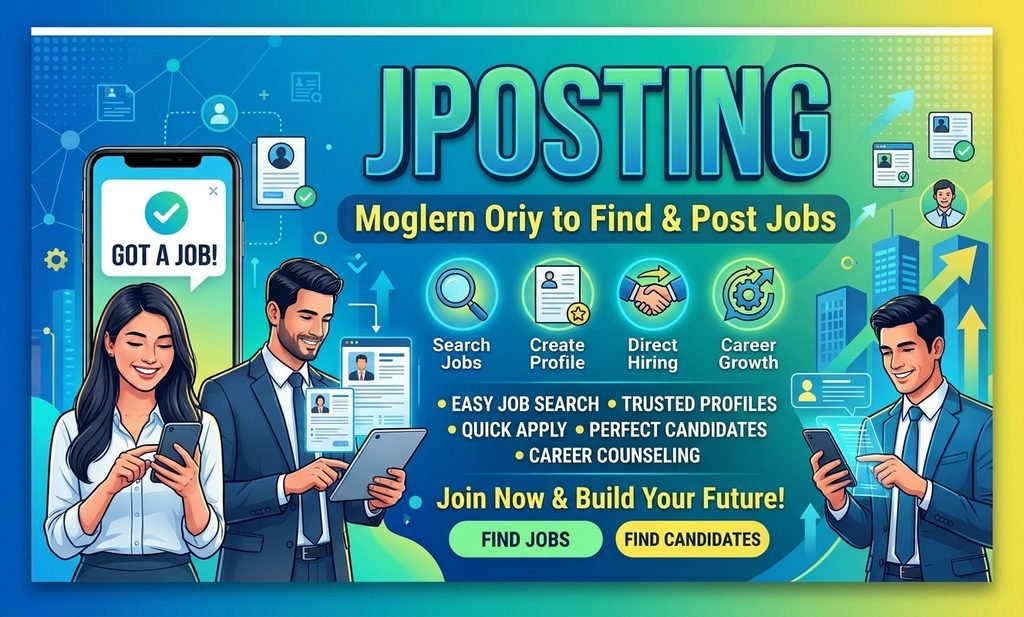
What Does Jposting Do?
Recruitment Management
One of the central concepts associated with Jposting is recruitment management. This refers to the administrative work involved in attracting candidates, receiving applications, reviewing qualifications, arranging interviews, and tracking hiring decisions.
Recruitment management software provides tools to organize these activities in a more consistent way.
For example, a company advertising a new position might receive dozens or hundreds of applications. Without an organized system, recruiters may struggle to identify which applications have been reviewed, which candidates need to be contacted, and which interviews are scheduled.
A recruitment management platform can help maintain candidate records and make the process easier to follow.
The precise features available depend on the particular product and the employer’s implementation.
Applicant Tracking Systems
Jposting’s history is associated with applicant tracking systems, commonly known as ATS software.
An applicant tracking system helps employers collect and organize information about job applicants. Depending on the software, it may also support communication, interview scheduling, reporting, and recruitment workflow management.
An ATS is different from a job board.
A job board primarily helps people discover vacancies and learn about employment opportunities. An applicant tracking system focuses more closely on what happens after an employer begins receiving applications.
Some recruitment systems connect these functions by integrating job advertisements, application forms, and internal hiring processes.
This distinction is particularly useful for job seekers who encounter unfamiliar names while applying for positions online.
JobSuite CAREER
JobSuite CAREER is a recruitment management product associated with the business history of Jposting and its successor organization.
The software is designed to help organizations manage recruitment activities and candidate information.
For employers, this type of system can make it easier to organize applications, coordinate hiring teams, and follow candidates through different stages of recruitment.
For applicants, the technology may be less visible. They might simply encounter an online application form, a candidate login page, or a portal where they can submit information.
The employer generally determines the vacancy requirements and makes hiring decisions. The recruitment software provides infrastructure for managing the process.
How Jposting-Related Recruitment Systems Work
Creating a Job Vacancy
The recruitment process usually begins when an employer decides to fill a position.
The organization defines the job title, responsibilities, qualifications, location, and application requirements. It then publishes the vacancy through an appropriate recruitment channel.
A recruitment management system can help maintain the vacancy details and support the process of collecting applications.
The specific arrangement varies between employers. Some use integrated careers websites, while others direct applicants to separate application portals.
Receiving Applications
Once a vacancy becomes available, interested candidates may submit résumés, contact information, work histories, and other requested details.
The system can organize these records so recruitment staff can review applications more efficiently.
Applicants should always provide accurate information and ensure that the documents they submit correspond to the position.
Reviewing Candidates
Recruiters evaluate applications against the employer’s requirements. Depending on the organization and software, the system may help sort applications, track progress, and record decisions.
However, the presence of recruitment software does not automatically mean that a candidate is being evaluated entirely by an algorithm.
Employers remain responsible for their recruitment policies and selection decisions.
Scheduling Interviews and Communicating
Interview scheduling and candidate communication are important parts of recruitment.
A well-organized system can help hiring teams monitor upcoming interviews, maintain records, and coordinate the next steps.
Applicants should remember that receiving an automated acknowledgment usually confirms only that an application was submitted. It does not guarantee an interview or employment offer.
Benefits of Recruitment Technology
Better Organization
One of the main benefits of recruitment software is improved organization.
Instead of keeping applicant information in several separate documents, employers can use a centralized system to manage records and follow recruitment progress.
This can be particularly useful for organizations with multiple departments, locations, or vacancies.
Greater Administrative Efficiency
Digital tools can reduce some repetitive administrative tasks.
For example, a structured workflow may make it easier to identify applications awaiting review, coordinate interviews, and maintain consistent records.
These efficiencies can allow recruitment teams to devote more attention to evaluating candidates and communicating with applicants.
However, the actual benefits depend on how well the system is configured and used.
Improved Visibility
Recruitment systems can provide an overview of different hiring stages.
Organizations may use this information to identify delays, monitor application volumes, and understand where additional attention is needed.
Such information can support better planning, although reports are only useful when the underlying records are accurate.
More Consistent Processes
A standardized recruitment workflow can help organizations apply similar procedures across different vacancies.
This does not automatically guarantee fairness. Employers must still establish appropriate selection criteria, protect candidate information, and ensure that decisions are made responsibly.
Technology supports the process; it does not replace good recruitment practices.
Jposting and the Modern Employment Market
The employment market has changed considerably as more organizations have adopted online applications and digital recruitment tools.
Job seekers increasingly expect to search for vacancies online, submit documents electronically, and receive updates through digital channels.
For employers, these changes create opportunities as well as challenges. Online recruitment can expand the pool of potential applicants, but it can also increase the volume of applications that recruitment teams must manage.
Recruitment management technology addresses part of this challenge by organizing information and supporting communication.
Jposting’s historical connection to recruitment systems illustrates the broader development of digital hiring infrastructure in Japan.
Nevertheless, it would be inaccurate to attribute every modern recruitment feature to Jposting or to assume that all employers use the same software.
The capabilities available to an applicant depend on the specific employer, recruitment product, and configuration.
Is Jposting a Person or a Company?
Jposting is primarily associated with a recruitment technology business rather than a publicly documented individual.
Consequently, the usual personal biography details do not apply in the same way they would to an actor, musician, entrepreneur, or public figure.
There is no established personal identity that can reliably be assigned to the name alone. Its real name, age, date of birth, birthplace, parents, childhood, siblings, education, spouse, and children therefore cannot be responsibly reported as personal facts about “Jposting.”
Similarly, there is no verified personal net worth to report for the name itself.
If someone is researching a particular executive or founder connected to the organization, that person’s biography would need to be examined separately using reliable public information.
This distinction matters because online searches sometimes combine company histories, product names, and individual profiles. Treating them as interchangeable can lead to inaccurate biographical claims.
Jposting’s Net Worth and Business Value
Jposting does not have a verified personal net worth because the name is associated with a business and recruitment technology rather than a clearly identified individual.
A company’s financial value is also different from a person’s wealth.
Business valuation may depend on revenue, profitability, assets, liabilities, ownership, market position, and other financial information. Without reliable financial disclosures, assigning a specific valuation would be speculative.
There is insufficient verified information here to provide a dependable net-worth figure for the historical Jposting business or its successor organization.
Readers should be cautious of websites that publish precise financial estimates without explaining their methodology or identifying credible supporting information.
Public Appearances, Social Media, and Online Presence
Jposting is not established as a celebrity or public personality with a conventional personal social media presence.
Its public visibility is better understood through company information, recruitment products, corporate announcements, and references to its place in Japan’s human resources technology industry.
No verified personal Instagram, Facebook, TikTok, or other social media account can be confidently attributed to Jposting as an individual.
Similarly, information about personal appearances, interviews, relationships, and daily activities is not applicable without identifying a specific person.
For readers investigating a recruitment website bearing the name, the most useful approach is to establish which organization operates the portal and whether it is connected to the employer advertising the vacancy.
Safety and Privacy Considerations
Encountering the word Jposting on an application page does not automatically establish whether that particular webpage is legitimate.
Even when a recruitment software provider has a documented corporate history, individual vacancies and messages should be checked independently.
Job seekers can take several practical precautions:
- Verify the advertised vacancy through the employer’s official careers page.
- Check the complete website address before entering personal information.
- Read the privacy notice to understand how application data may be collected and used.
- Be cautious of requests for unexpected payments in exchange for guaranteed employment.
- Avoid sharing passwords, banking credentials, or unnecessary sensitive information.
- Contact the employer through independently verified contact details if anything appears suspicious.
These precautions are useful for any online recruitment system, not just one associated with Jposting.
Employers also have responsibilities. They should protect candidate records, limit access to sensitive information, maintain appropriate security measures, and communicate clearly about how applications are processed.
Jposting’s Relevance Today
Jposting’s significance lies in its connection to the development of digital recruitment management in Japan.
As businesses increasingly depend on online hiring processes, recruitment systems have become an important part of the employment infrastructure. They help organizations organize applications, coordinate hiring teams, and manage the administrative stages between advertising a vacancy and making a decision.
The related JobSuite software family provides context for understanding this business history.
At the same time, the technology should not be confused with an individual celebrity biography, a universal job-search website, or a general-purpose content-publishing platform.
The most accurate description depends on the context in which the name appears.
For job seekers, the priority is verifying the employer and application page. For employers and researchers, it is understanding the relationship between the historical Jposting business, its associated software, and subsequent corporate changes.
Frequently Asked Questions About Jposting
1. What is Jposting?
Jposting is a name associated with Japan Job Posting Service, a Japanese recruitment technology business historically connected with recruitment management systems and the JobSuite software family.
2. Is Jposting a person or a company?
Jposting is primarily associated with a business and recruitment technology. It should not be treated as a person’s name without additional evidence identifying a specific individual.
3. What is Jposting used for?
Its historical business is associated with recruitment management, applicant tracking, and recruitment website technology. Specific features depend on the product and implementation.
4. What is the relationship between Jposting and JobSuite CAREER?
Jposting is connected to the historical business behind recruitment management services, while JobSuite CAREER is a related recruitment software product used to support hiring activities.
5. What is Jposting’s net worth?
No reliable personal net-worth figure applies to Jposting as a business name. A company’s valuation would require separate, credible financial information.
6. Does Jposting have an official social media account?
No personal social media account can be confidently attributed to Jposting as an individual. Readers should verify any company account through the relevant organization’s official information.
7. Is a Jposting-related application website safe?
The name alone cannot establish whether an individual website is safe. Verify the employer, vacancy, domain, privacy notice, and application requirements before submitting personal information.
Final Thoughts
Jposting is best understood through its documented connection to Japanese recruitment technology and the evolution of digital hiring systems. Its history illustrates how specialized software can help employers organize applications, coordinate recruitment activities, and manage candidate information.
Although the name may initially appear to describe an individual or a general online posting service, its established business context is more specific. Personal details such as age, family background, relationships, and individual net worth should not be invented to fit a celebrity-biography format.
Understanding that distinction produces a more informative and credible account of Jposting, its historical role, and its relevance to modern recruitment.





One Comment